
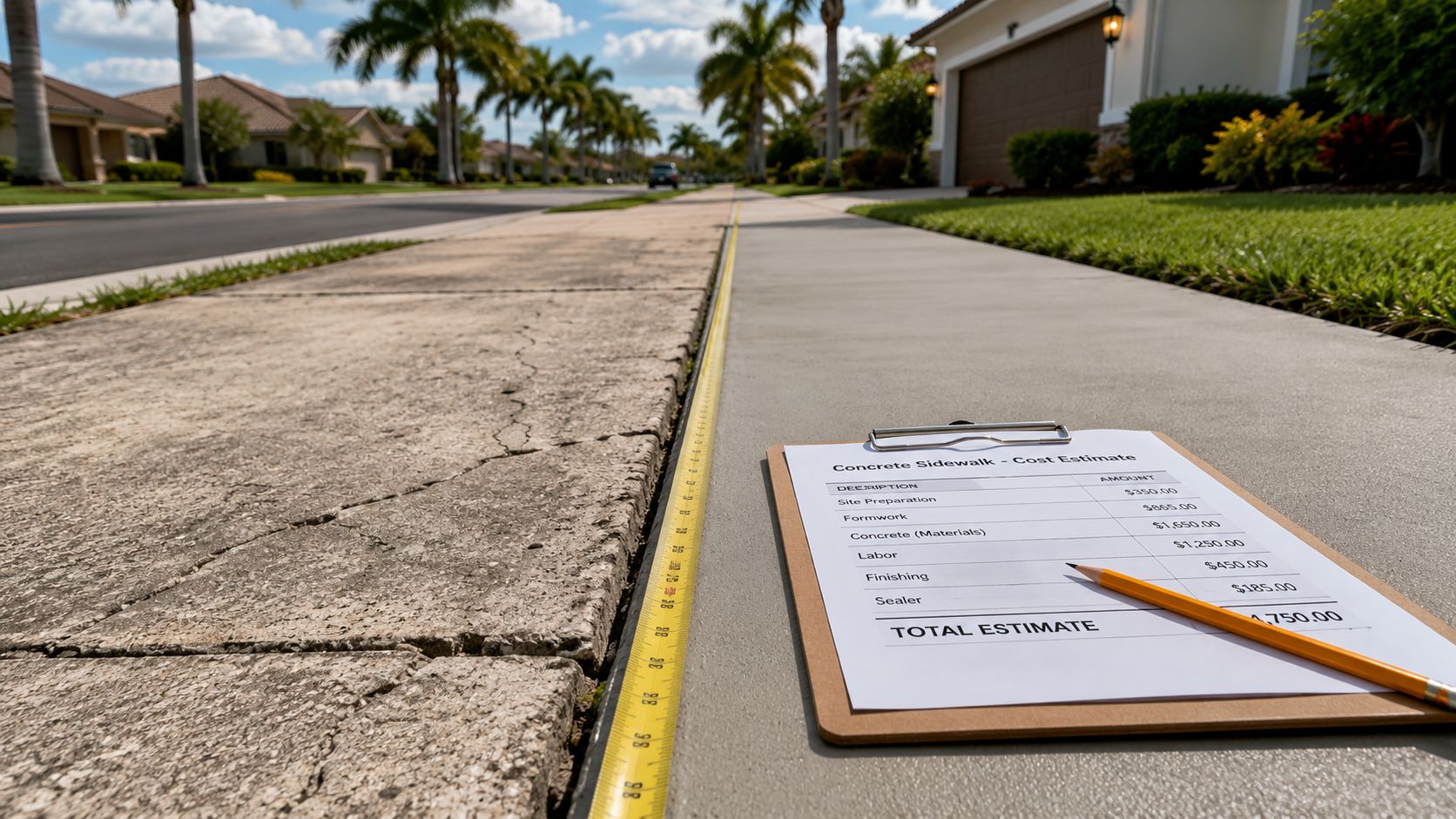
Replacing a sidewalk in Central Florida typically runs $12 to $22 per square foot when the price includes demolition of the old concrete. That final number moves up or down based on site access, removal work, base prep, drainage, permits, and ADA requirements.
A lot of owners in Ocala, Inverness, Dunnellon, and The Villages start in the same place. They notice one panel lifting, another cracking, and weeds pushing through the joints, then the question hits fast: what's this really going to cost me? The national calculators give a rough range, but they usually miss the local issues that matter in Marion County, FL and Citrus County, FL, especially sandy subgrade, rain runoff, right-of-way rules, and accessibility upgrades near commercial entries.
That's where sidewalk estimates often go sideways. One quote may look low because it skips haul-off, permit handling, or proper compaction. Another may be higher because it includes the work that keeps a new walk from settling or cracking early in Florida conditions. For homeowners in Belleview, Silver Springs, Summerfield, Crystal River, Homosassa, Lecanto, Beverly Hills, Hernando, and nearby communities, the main job is understanding what's inside the quote before you compare numbers.
Table of Contents
- Introduction What Is the Real Cost to Replace a Sidewalk
- Cost Per Square Foot vs Per Linear Foot
- The 4 Biggest Factors Driving Your Total Cost
- Budgeting for ADA Ramps and Local Permits
- Why Florida's Climate Demands a Professional Job
- How to Get a Reliable Quote in Marion and Citrus County
- Frequently Asked Questions About Sidewalks
Introduction What Is the Real Cost to Replace a Sidewalk
A property owner in Ocala usually calls after the same moment. Someone trips on a lifted panel, rain sits in the low spot for days, or a code notice shows up because the walk no longer meets grade or accessibility requirements.
In Central Florida, sidewalk replacement pricing often starts with national square-foot averages, but those numbers miss several cost drivers that show up fast in Marion and Citrus Counties. Sandy subgrade can look stable and still need correction. Tree roots and drainage issues often extend the repair beyond the cracked section you can see from the surface. If the work ties into a public sidewalk, commercial frontage, or an ADA route near places like The Villages or busy corridors in Ocala, permit and compliance work can change the total quickly.
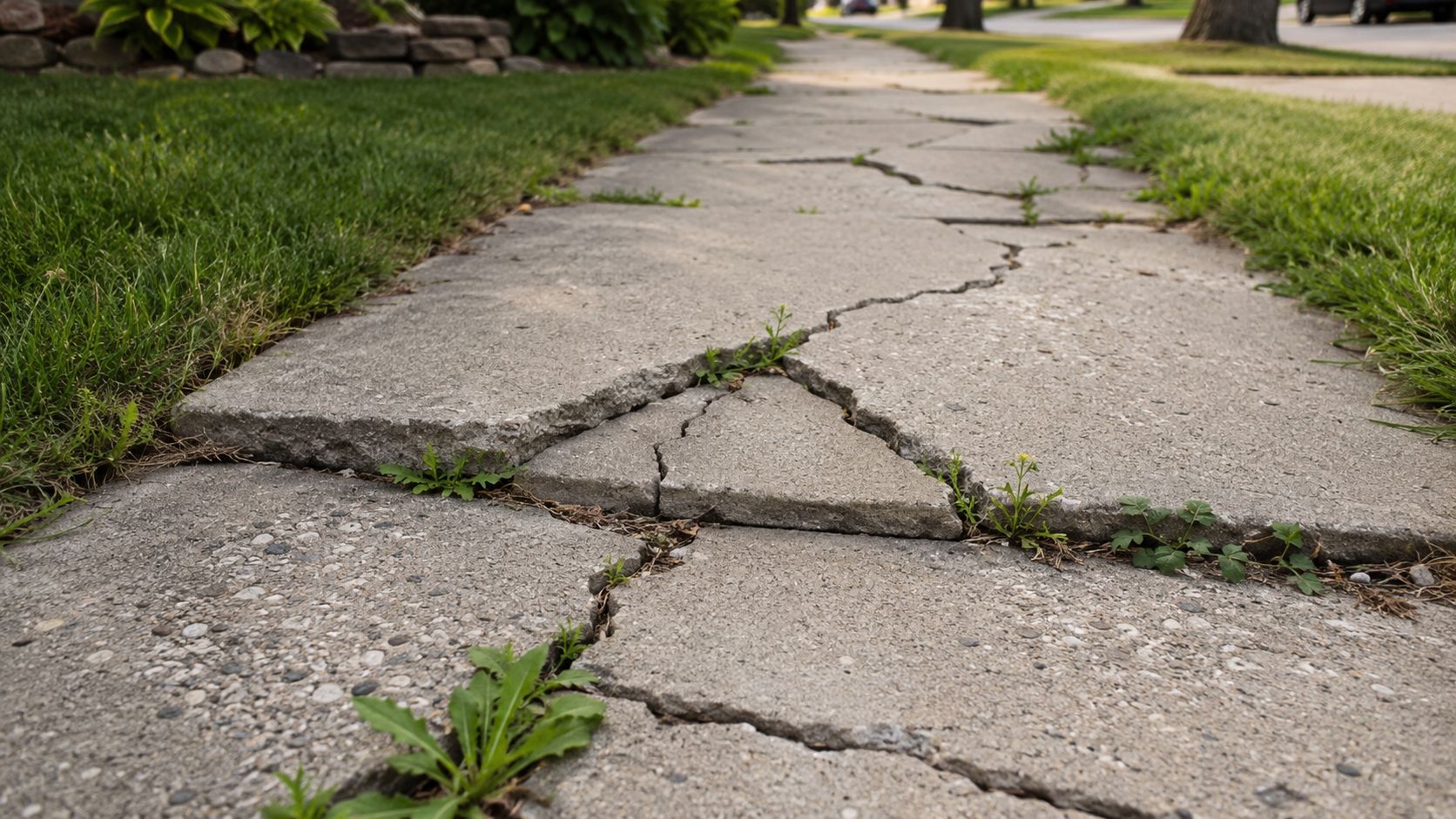
A small replacement can still become a complete project once demolition, haul-off, grading, forming, finishing, and cleanup are all included.
That is why the first number on an estimate is rarely the number that matters most. We often see quotes that leave out disposal, base repair, or the extra forming needed to match slope and elevation. On paper, that bid looks cheaper. In the field, it usually means change orders, drainage problems, or a slab that starts failing early under Florida heat and heavy summer rain.
For property owners in Inverness, Crystal River, Ocala, and nearby communities, the useful question is not just what concrete costs. It is what it takes to replace the sidewalk correctly for local soil, water, access, and code conditions.
Cost Per Square Foot vs Per Linear Foot
Sidewalk estimates often use two measurements, and they are not interchangeable. Square foot pricing tells you what you are paying for the full area of concrete. Linear foot pricing helps with rough budgeting when the walk stays the same width from start to finish.
Square footage is usually the better number for actual replacement quotes
For most homes, storefronts, and smaller properties in Marion and Citrus Counties, square foot pricing gives the cleaner picture. It captures width changes, widened sections at entries, and areas that need to meet accessible walking-space requirements.
As noted earlier, full replacement usually costs more than a new pour because demolition, haul-off, and site correction are part of the work. Tear-out is often priced separately, and that matters in Florida because a sidewalk can look like a simple panel swap until the crew opens it up and finds soft subgrade, root pressure, or edge erosion from runoff.
That is a common issue around Ocala, Inverness, and older neighborhoods with mature trees. The width may be standard, but the repair scope is not.
Linear foot pricing works better for long, consistent runs
Linear foot pricing is more common on long sidewalks with a fixed width, especially for planning purposes. HOAs, schools, municipalities, and commercial properties sometimes prefer it because it gives a quick budget number for a continuous run.
A sidewalk finance report citing FHWA-based estimates places typical sidewalk construction at about $12 to $20 per linear foot for a 6-foot-wide sidewalk, and another public estimate cited there puts construction at $92 per linear foot for a 5-foot width, or about $485,760 per mile, as shown in this sidewalk finance planning report. That can help an HOA in The Villages or a commercial owner in Belleview size up a long route before getting detailed bids.
The catch is simple. Linear foot pricing can hide what really changes cost. A 100-foot sidewalk at 4 feet wide is a very different job from 100 feet at 6 feet wide, and the difference gets bigger if one section needs a ramp, thicker edge support, or extra grading to hold slope after summer rain.
| Pricing Method | Typical Use | Best For |
|---|---|---|
| Square foot | Measures total concrete area, including width changes and widened sections | Homes, short walkways, irregular layouts, section replacement, ADA tie-ins |
| Linear foot | Measures total run length, usually assuming a consistent width | Long runs, public works budgeting, HOAs, campuses, commercial routes |
If the sidewalk changes width, connects to a driveway, or ties into a ramp or landing, square foot pricing usually reflects the actual work more accurately.
For most property owners in Dunnellon, Summerfield, Lecanto, or Homosassa, the best estimate shows both measurements clearly. Linear feet can help with early budgeting. The contract price should still spell out width, thickness, removal, base prep, and exactly where the replacement starts and stops. That is how permits affect the final cost, and it is also how you avoid a cheap-looking quote that leaves out half the job.
The 4 Biggest Factors Driving Your Total Cost
A solid sidewalk estimate is built from parts, not one magic number. That's why one contractor's quote may look simple while another shows separate charges for removal, excavation, disposal, and the new pour.
One industry estimate breaks replacement into roughly $3 to $8 per square foot for removal, $2.50 to $15 per cubic yard for excavation, $140 to $230 per cubic yard for dirt disposal, and $5 to $10 per square foot for the new concrete pour, producing an overall replacement range of about $10 to $25+ per square foot depending on conditions, according to this sidewalk removal and replacement cost guide.
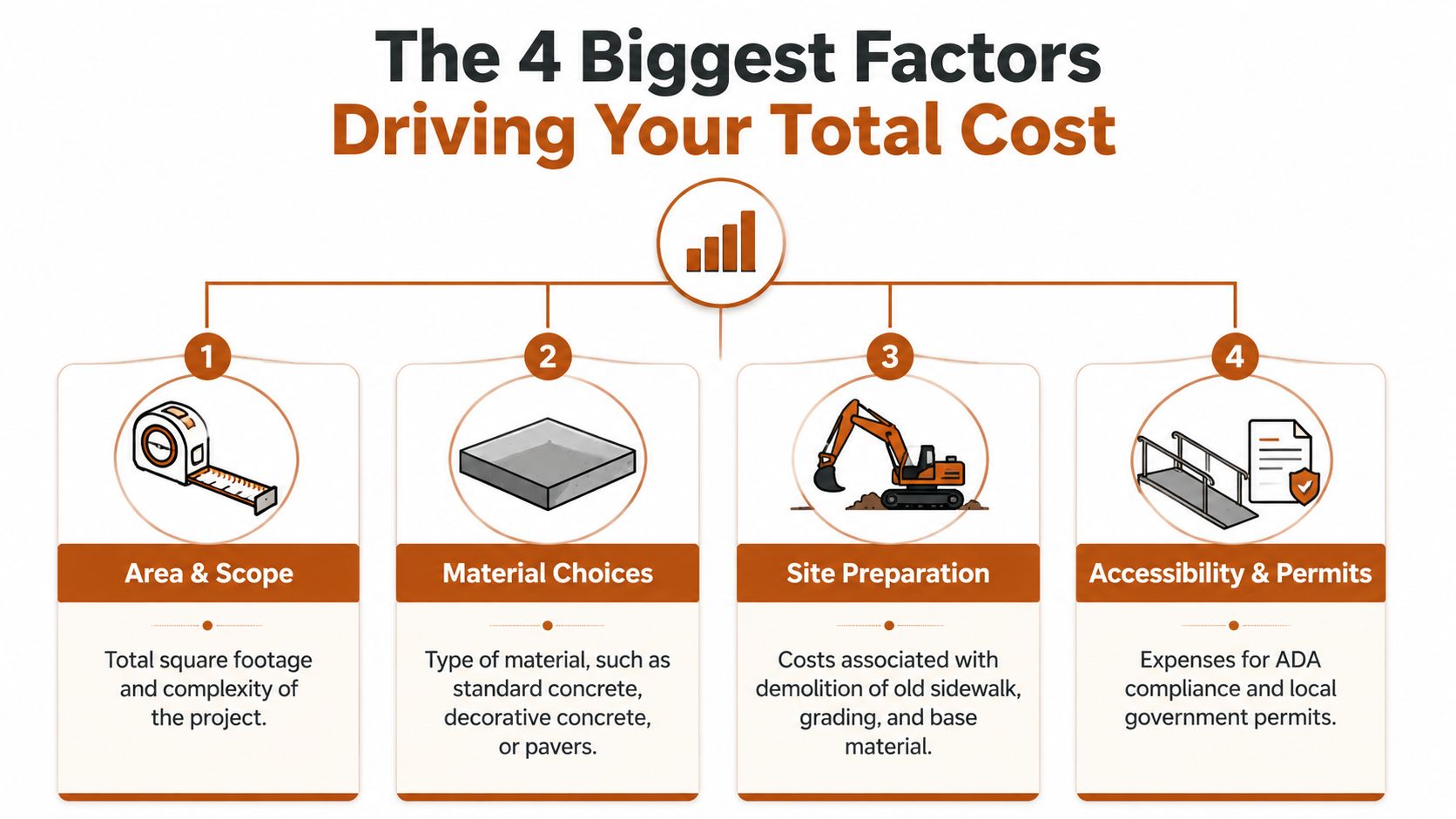
Demolition and Disposal
Old concrete has to come out cleanly before a good slab goes in. That sounds obvious, but hidden costs often begin here.
If the existing walk is thick, reinforced, root-damaged, or boxed in by fencing, landscaping, or irrigation, removal gets slower. Hauling also matters. A contractor has to break the slab, load it, move it, and dispose of it legally. In tighter neighborhoods around Ocala or older residential areas in Inverness, access alone can change labor time.
Subgrade and Base Preparation
This is the part many low bids soft-pedal. In Central Florida, sandy soils can be workable, but they can also shift if the base isn't compacted properly or if water keeps moving under the slab.
A sidewalk isn't strong just because the top surface looks smooth on day one. If the grade is soft, washed out, or uneven, the new concrete starts losing the fight early. That's especially true near downspouts, swales, and low spots in yards around Silver Springs or Beverly Hills.
Good sidewalks fail from underneath before they fail from above.
Concrete Thickness and Reinforcement
Not every walkway carries the same load. A path that crosses a driveway, turns into a building entrance, or sits in a busy commercial corridor may need a different build approach than a simple garden walk.
The right thickness, reinforcement choice, and joint layout depend on use. For Florida work, contractors also need to think about how heat and daily expansion affect crack control. Owners don't need to memorize mix design details, but they should expect the quote to reflect the actual use of the sidewalk, not a one-size-fits-all slab.
Custom Finishes or Drainage
Most sidewalks use a practical broom finish because it adds traction and looks clean. But finish isn't just cosmetic. Surface texture matters in rain, and proper slope matters even more.
Drainage work can raise price fast because it changes layout, grading, and sometimes the tie-in to adjacent surfaces. Commercial entries in Ocala and HOA paths in The Villages often need more careful transitions so water doesn't pond where people walk. Decorative borders, special edges, or integration with nearby patios also add labor even when the square footage stays the same.
A careful estimate should make room for these real-world items:
- Removal scope: Is it one panel, several sections, or a full run?
- Ground correction: Does the base need grading, compaction, or fill?
- Use conditions: Will the sidewalk ever take carts, service traffic, or driveway crossover loads?
- Water management: Does runoff move across the walk or collect beside it?
That's what separates a quote that looks cheap from one that's built to hold up.
Budgeting for ADA Ramps and Local Permits
A lot of sidewalk jobs cost more than owners expect because the concrete itself isn't the whole project. Accessibility and local permitting can change the bill, especially for commercial sites, corner lots, HOAs, churches, retail centers, and any path that connects parking to a building entrance.
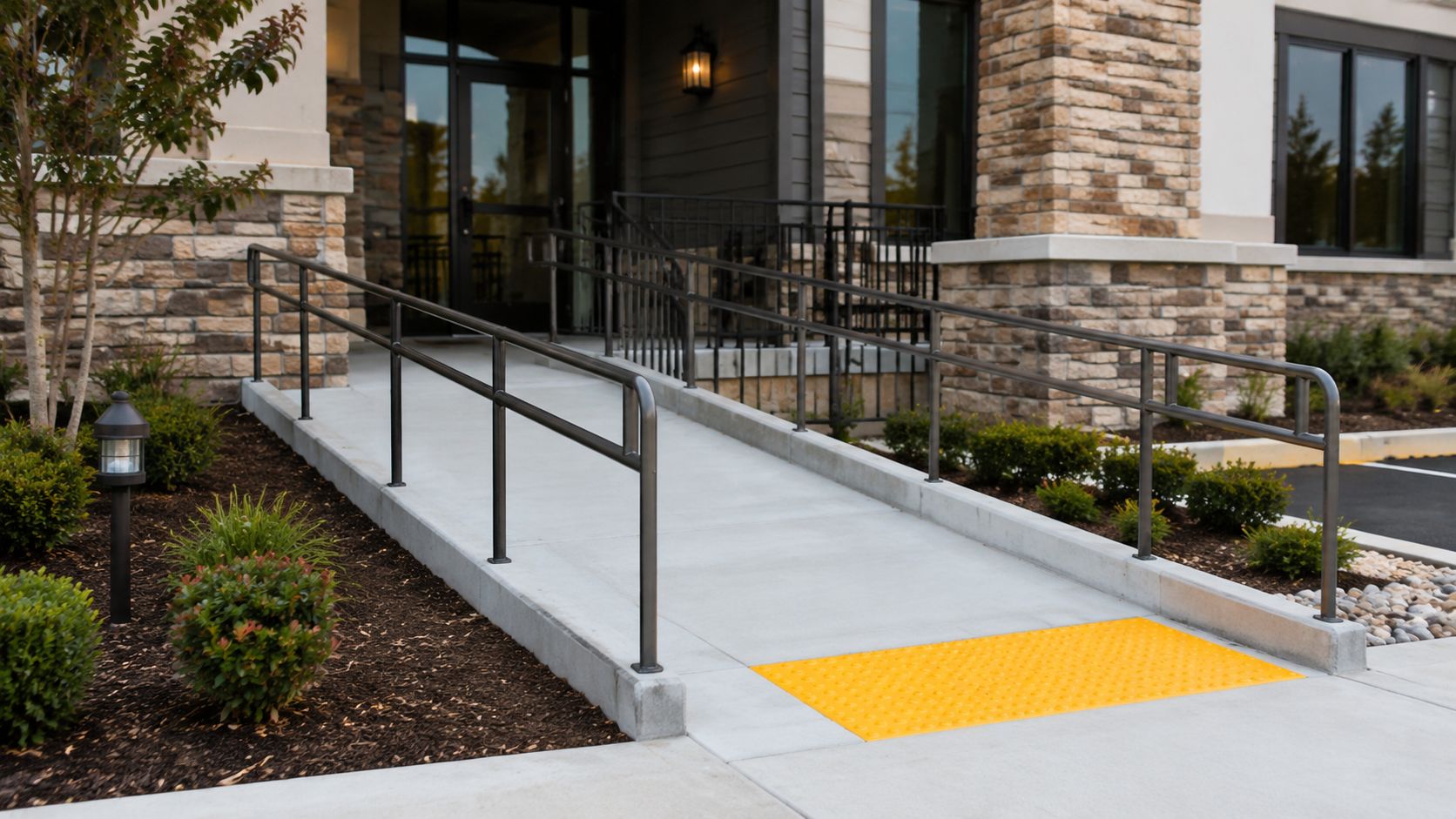
Where ADA costs show up
ADA work often means more than replacing flat concrete. It may involve width, slope, cross-slope, transitions, landings, curb ramps, and detectable warning surfaces depending on the site. On commercial properties in Ocala, Crystal River, or near high-traffic areas in The Villages, these items aren't optional if the route serves the public.
Parking and sidewalk access also have to work together. If you're reviewing a larger property improvement, it helps to understand ADA handicap parking space requirements at the same time as walkway upgrades so the route from the lot to the door functions as one compliant path.
Why permits change the real bill
Many cost pages only talk about total replacement cost. That misses the practical question owners care about, which is who pays and what local rules apply.
A city program example shows just how much public policy can affect the owner's share. In Coalinga, California, sidewalk replacement is split 50-50 with property owners, the city fully covers ADA-required curb ramps, and the city absorbs overages above the engineer's estimate, as described in this sidewalk cost-share program overview. The exact rules in Marion County, FL or Citrus County, FL won't match that program, but the lesson is the same. Before you lock in a budget, find out whether the sidewalk is private, in the public right-of-way, or tied to a municipal requirement.
The total contract price and the amount you actually owe aren't always the same thing.
For owners in Dunnellon, Inverness, Belleview, and Lecanto, permit questions usually matter most when the work touches a public sidewalk, street corner, drainage area, or access route tied to a business. A professional contractor should flag that early, not after demolition starts.
Why Florida's Climate Demands a Professional Job
Cheap sidewalk work doesn't stay cheap in Central Florida. The slab may look fine after the pour, then the first stretch of hard rain, standing water, and heat starts exposing weak prep.
Heat Rain and Sandy Soil Work Together
Marion County, FL and Citrus County, FL have conditions that punish shortcuts. Summer storms can move water across a site fast. Sandy soil can drain well in one area and wash out under an edge in another. Heat bakes the surface, while repeated moisture movement works on the base below.
That combination is why proper compaction, grading, and joint placement matter so much in places like Summerfield, Hernando, and Homosassa. If the subgrade isn't stable, the slab can settle. If drainage is wrong, water hangs around and starts undermining support. If the surface mix and finish are poor, the top breaks down faster.
What Holds Up Better in Central Florida
A sidewalk built for Florida should shed water, resist surface wear, and have control joints placed with purpose. It also needs a contractor who knows how to spot early distress signs such as scaling, flaking, or surface breakdown. If you're seeing those issues already, this guide on what concrete spalling looks like and what causes it can help you tell the difference between cosmetic wear and a deeper replacement issue.
Concrete and Asphalt Experts in Marion and Citrus County handle this kind of evaluation every day because local pavement work isn't just about pouring material. It's about building for Florida conditions so the same section doesn't need attention again far too soon.
How to Get a Reliable Quote in Marion and Citrus County
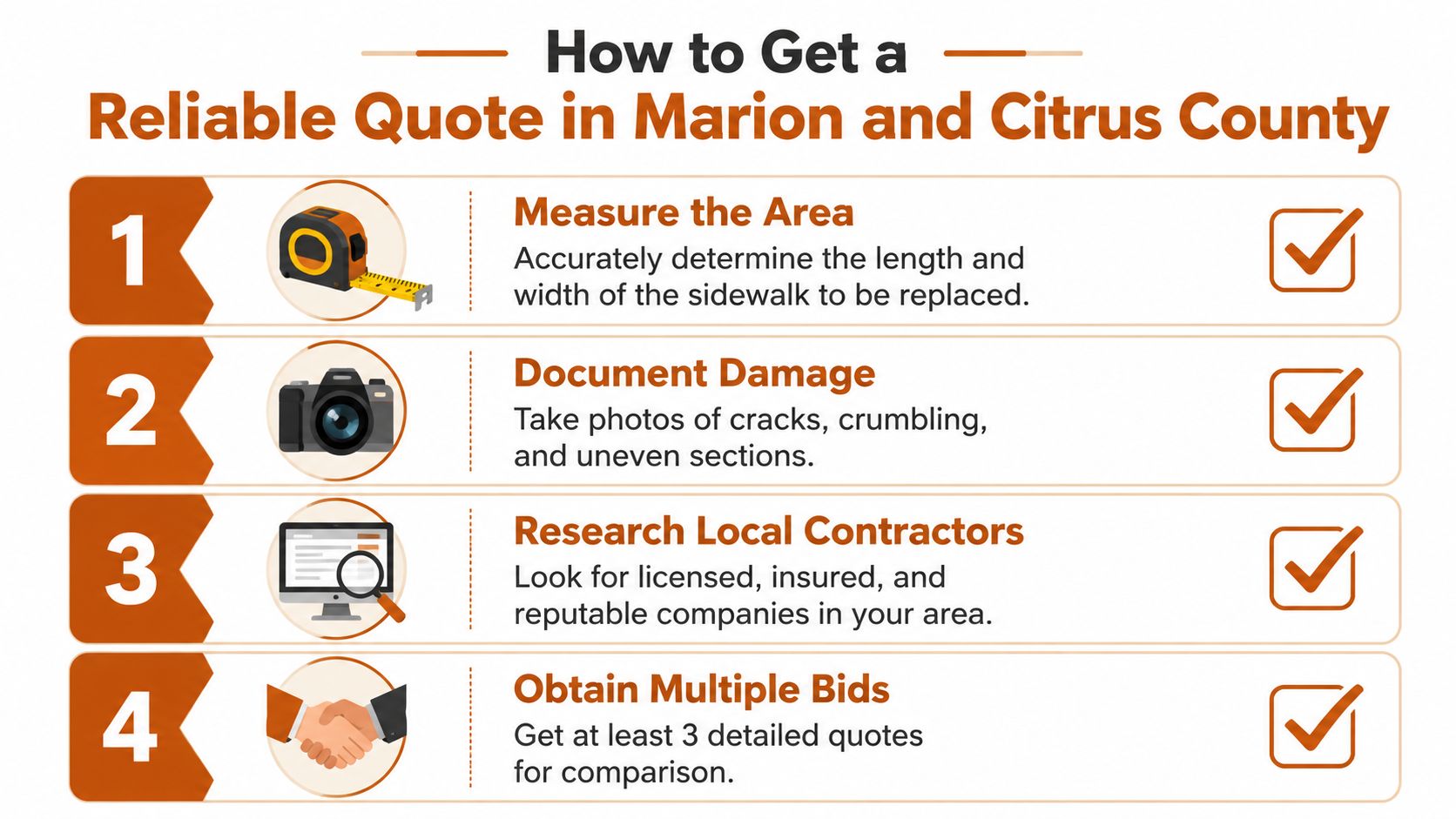
Two sidewalk quotes can look close on paper and end up covering very different work. In Marion and Citrus Counties, that usually comes down to what the contractor includes below the concrete, whether permit coordination is needed, and how carefully the site is measured for drainage, access, and ADA details.
What to Have Ready Before the Estimate
A clean estimate starts with good site information. Owners do not need engineered drawings for a basic quote, but they should be ready to show how the walk is used, where the problem sections are, and what could slow down the crew.
Have these details ready before the visit:
- Approximate length and width: This helps the contractor frame demolition, forming, and concrete quantities.
- Photos of problem areas: Cracks, settlement, edge failure, standing water, and trip points help narrow down likely causes.
- Obstacles and access limits: Gates, fences, irrigation, tree roots, utility covers, AC pads, and nearby parked vehicles all affect labor and equipment access.
- Property use: A residential front walk is priced differently than an HOA path, a storefront connection, or a sidewalk serving a commercial entrance.
In places like Ocala, Inverness, Crystal River, and The Villages, it also helps to review a practical list of questions to ask a concrete contractor before signing a sidewalk replacement agreement. That keeps the conversation focused on scope, responsibility, and what is included in writing.
A walkthrough also shows you what a contractor notices on site.
What a Detailed Quote Should Include
A reliable quote should spell out more than the pour itself. In this part of Florida, I would expect the estimate to address removal, haul-off, subgrade correction if needed, base preparation, forming, reinforcement if specified, joint layout, finish, and cleanup. If a quote skips those items, the price may be low because the scope is thin.
Look for these details:
- Exact replacement area: The quote should identify which panels, sections, or connections are being removed and replaced.
- Subgrade and base prep: Sandy soils can look stable at the surface and still shift under load or after heavy rain. If regrading, compaction, or base repair is needed, it should be listed.
- Drainage and transitions: Changes at driveways, curb ramps, building entries, or lawn edges need to be addressed clearly so water does not get trapped against the new walk.
- Finish and joint work: Broom finish, edging, control joints, and slope should be described, not left to assumption.
- Site protection and curing access: The contractor should explain how pedestrian traffic will be handled while the concrete cures and how the area will be left at the end of the job.
Local knowledge matters here. A contractor who works regularly in Marion and Citrus Counties is usually better prepared for county review, commercial access requirements, and the small site issues that national estimating templates miss.
Riverside Sealing & Striping, LLC is one local contractor that handles concrete replacement work along with asphalt maintenance services. That can help when sidewalk replacement needs to be coordinated with striping, parking layout changes, or access updates on the same property.
A reliable quote lets you compare scope, risk, and long-term value, not just the lowest number.
Frequently Asked Questions About Sidewalks
Property owners usually ask the same practical questions. Can this section be repaired, how long will pricing take, which material makes sense, and who is responsible for the bill.
Can a Sidewalk Be Repaired Instead of Replaced
Sometimes. Hairline cracks or minor surface wear can often be repaired if the slab is still level, stable, and draining properly.
Replacement is usually the better investment when panels have settled, lifted, broken at joints, or created repeat trip hazards. If the core problem is in the base or the soil below, surface patching usually fails again after a wet season in Marion or Citrus County. That is common on sandy sites where water moves through fast, then leaves voids or uneven support under the walk.
How Long Does Pricing a Long Walkway Take
A short residential walk can usually be measured and priced quickly. A long HOA or commercial sidewalk takes more field review because widths change, grades shift, and every ramp, driveway tie-in, or building entrance affects the scope.
Public estimating models treat sidewalk work the same way. Total cost changes with panel size, square footage, and the number of sections being replaced, as shown in the University of Illinois sidewalk repair cost model. On local jobs, I would add one more factor that national templates often miss. In places like The Villages, Ocala commercial corridors, or older Citrus County properties, ADA transitions and permit review can add time before a contractor can give a reliable final number.
Is Concrete or Asphalt Better for a Walkway
For most sidewalks, concrete is the right material. It holds grade better for pedestrian routes, gives you cleaner joint layout, and works better where ADA slope and landing details matter.
Asphalt can still make sense on certain properties, especially where a path ties into a larger paved area and the owner wants one maintenance plan for the whole surface. It helps to work with a contractor who handles both materials, because the best choice depends on use, drainage, appearance, and how the walkway connects to the rest of the site.
Who Usually Pays for Sidewalk Replacement
That depends on ownership and location.
A private sidewalk is usually the property owner's responsibility. A sidewalk near a street corner, right-of-way, curb ramp, or shared access point may involve the city, county, HOA, landlord, tenant, or a combination of those parties. In Marion and Citrus Counties, that question should be settled before work starts, especially on commercial properties or multi-tenant sites where ADA access has to stay available during the project.
Riverside Sealing & Striping, LLC handles sidewalk replacement along with asphalt maintenance and access-related pavement work in Central Florida. That can help when a property owner needs to coordinate new sidewalk sections with parking layout, striping updates, or broader surface repairs on the same site.