
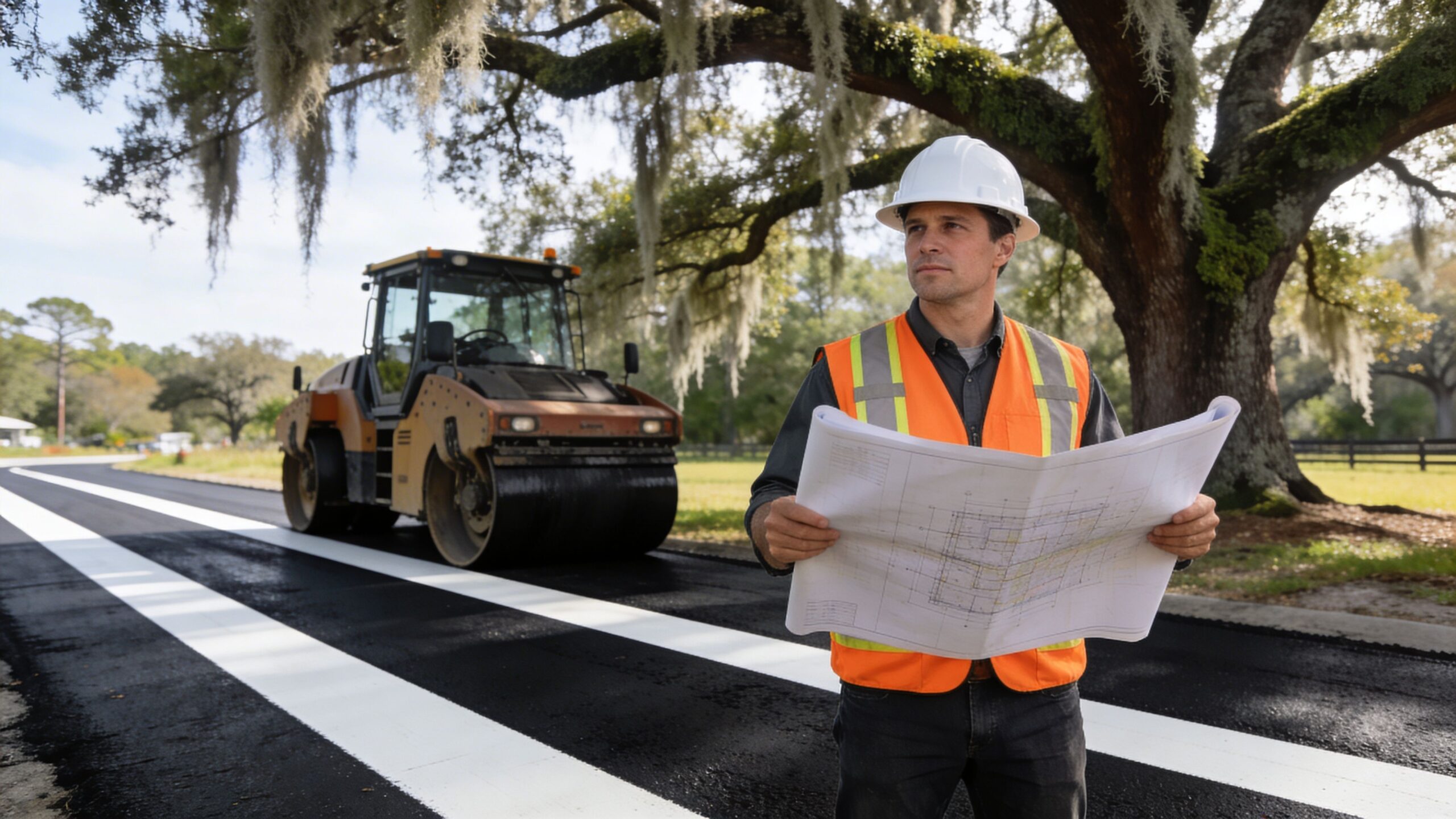
A lot of property owners in Central Florida call when the surface finally looks bad. The driveway has settled, the sidewalk has cracked, or the parking lot has faded so much that traffic flow is starting to become a safety issue.
That’s late in the game.
The better way to think about pavement is the way southern asphalt engineering approaches it. Not as a patch here and a stripe there, but as a full system that includes site prep, drainage, material choice, concrete work, asphalt protection, and long-term maintenance. That matters in Marion County, Citrus County, Ocala, Dunnellon, Crystal River, Inverness, and the surrounding area because Florida weather exposes every shortcut.
For homeowners, that can mean deciding whether a driveway needs replacement or whether adjacent concrete is causing the asphalt edge to fail. For HOAs, churches, retail centers, and property managers, it usually means balancing appearance, liability, access, ADA requirements, and budget without hiring three different contractors to solve one property problem.
Your Guide to Southern Asphalt Engineering
Southern asphalt engineering is best understood as a practical method. It applies engineering thinking to real-world pavement and concrete work so the surface lasts longer, drains correctly, and doesn’t fail early under Florida conditions.
That’s why the term matters to property owners, not just engineers.
A worn parking lot in Ocala or a broken walkway in Citrus County usually doesn’t fail for one reason. It fails because several problems stack up together. Water gets in. Heat dries the surface out. Traffic pounds weak spots. Poor layout causes runoff to move where it shouldn’t. Then someone tries to fix the symptom without fixing the cause.
What the approach actually means
A real southern asphalt engineering mindset starts with a few basic questions:
- What is failing: Surface wear, base movement, edge breakdown, trip hazards, drainage issues, or layout problems.
- What material makes sense: Concrete for new construction and replacement in some areas. Asphalt maintenance and protection in others.
- What sequence saves money: Demolition, grading, replacement, seal coating, striping, and ADA work need to happen in the right order.
- What can be preserved: Not every surface needs full replacement. Not every cracked surface is worth saving either.
Companies like Southern Asphalt Engineering helped establish the one-stop-shop pavement model, combining paving, milling, concrete work, and striping to reduce project costs and delays for owners in subtropical climates, as described on the Southern Asphalt Engineering company background.
Practical rule: The cheapest repair on day one often becomes the most expensive decision a year later if the base, drainage, or layout was wrong from the start.
What property owners should look for
The biggest difference between a surface-level repair crew and a real full-service contractor is decision-making.
One crew sees a crack and sells filler. Another looks at slope, surrounding concrete, traffic movement, water entry points, and whether the repair belongs in a broader maintenance plan. That’s the difference between temporary appearance work and work that protects the property.
If you’re weighing patching against replacement, this breakdown of Florida asphalt repair options is a useful next step.
In Central Florida, the right answer often isn’t asphalt only or concrete only. It’s a coordinated plan that uses both materials where they perform best.
The Two Pillars of Pavement Solutions Concrete and Asphalt
Concrete and asphalt solve different problems. Good contractors know where each one belongs and where owners waste money by forcing the wrong material into the wrong application.
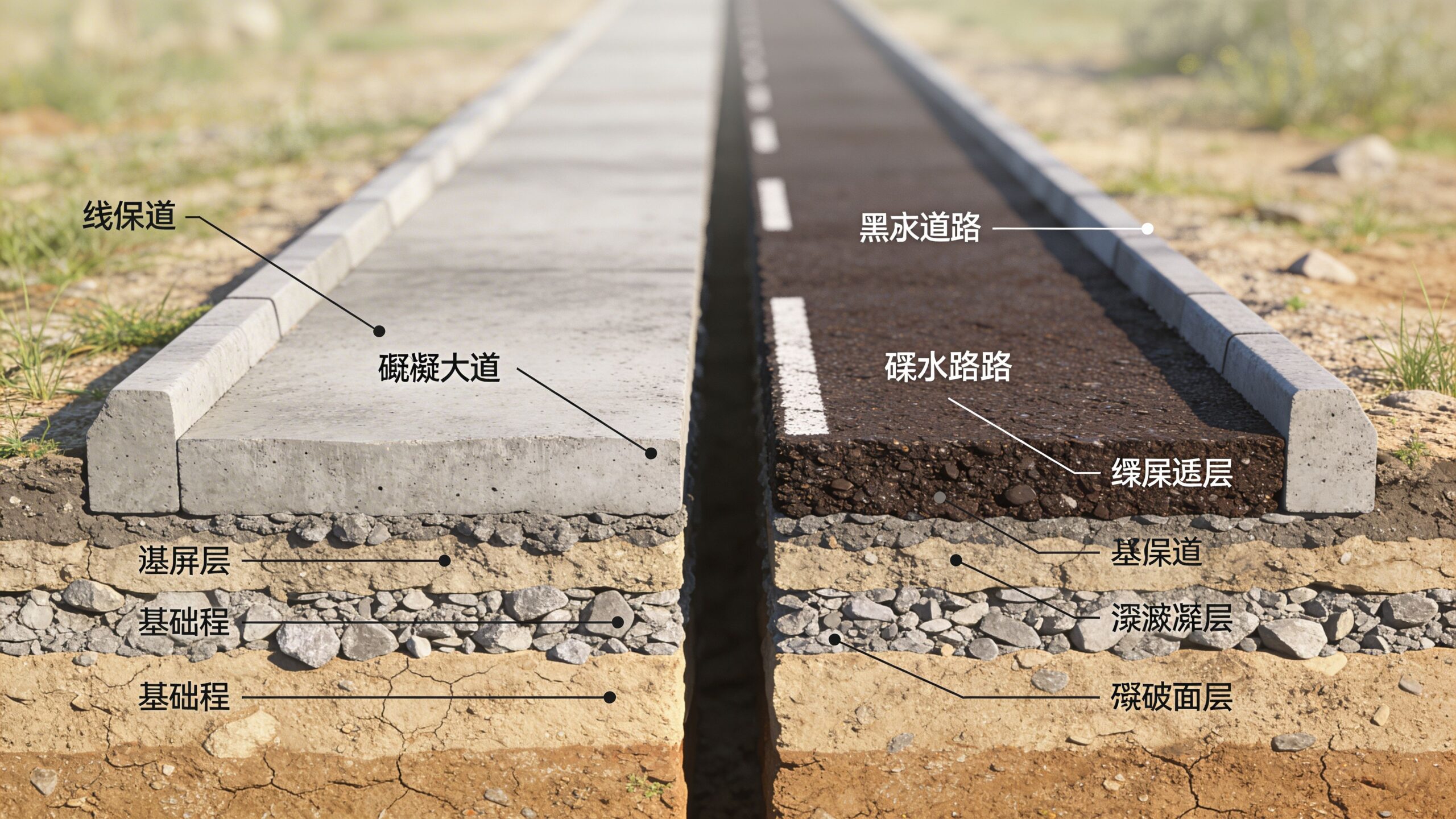
Concrete for structure, access, and long-term hardscape value
Concrete is usually the right choice when the job calls for new construction, full replacement, defined edges, and clean finished appearance.
That includes:
- Driveways: New driveway installation and replacement where the old slab has broken apart, settled, or become an eyesore.
- Patios and slabs: Outdoor living areas, equipment pads, and functional flatwork that need clean grades and dependable finish work.
- Sidewalks and walkways: Paths that need safe transitions, consistent elevation, and ADA-conscious installation.
- Demolition and replacement: Removing failed sections completely when patching would only hide deeper issues.
Concrete also gives owners design flexibility. A plain broom finish works for many residential jobs. Decorative and functional finishes make sense where appearance matters just as much as service life.
For homeowners in Belleview, Silver Springs, Summerfield, Homosassa, Lecanto, or Beverly Hills, the most important point is simple. A concrete driveway or walkway is only as good as the prep under it. Poor base preparation shows up later as movement, cracking, rocking slabs, and water problems.
Asphalt for preservation, protection, and traffic organization
Asphalt maintenance is a different discipline. It’s not about building every surface from scratch. It’s about protecting what you already own and keeping it serviceable.
The core asphalt services most commercial and mixed-use properties need are:
- Seal coating: Helps shield the surface from sun, water, oil, fuel, and daily wear.
- Parking lot striping: Restores order, traffic flow, stall visibility, and curb appeal.
- ADA-compliant markings: Keeps accessible spaces and routes properly marked.
- Surface maintenance: Addresses wear before it turns into major reconstruction.
Many owners make a costly mistake. They spend money on fresh striping over a lot that should have been cleaned, repaired, or sealed first. It looks better for a while, but the improvement doesn’t hold.
A clean parking lot with sharp striping says a lot about how a property is managed. It also reduces confusion for tenants, guests, and delivery traffic.
Why full-service capability matters
The reason southern asphalt engineering translates well for Central Florida owners is that properties rarely need just one trade.
A church may need a new sidewalk, replacement curb-adjacent concrete, seal coating in the lot, and ADA stall updates. A retail center may need traffic markings after concrete island repairs. A homeowner may need a driveway replacement and a walkway tie-in that matches grade.
Here’s the practical split:
| Surface need | Concrete is usually the better fit | Asphalt is usually the better fit |
|---|---|---|
| New driveway or slab | Yes | Sometimes, depending on site and use |
| Sidewalks and walkways | Yes | Rarely |
| Surface protection | No | Yes |
| Parking lot layout and markings | Limited | Yes |
| Decorative hardscape finish | Yes | No |
| Ongoing maintenance program | Limited | Yes |
Owners get better outcomes when one contractor can evaluate both sides impartially. That keeps the recommendation tied to the property, not to a narrow service list.
How Florida Weather Attacks Your Pavement
Florida doesn’t damage pavement in one dramatic event. It wears surfaces down a little at a time until the failure becomes obvious.
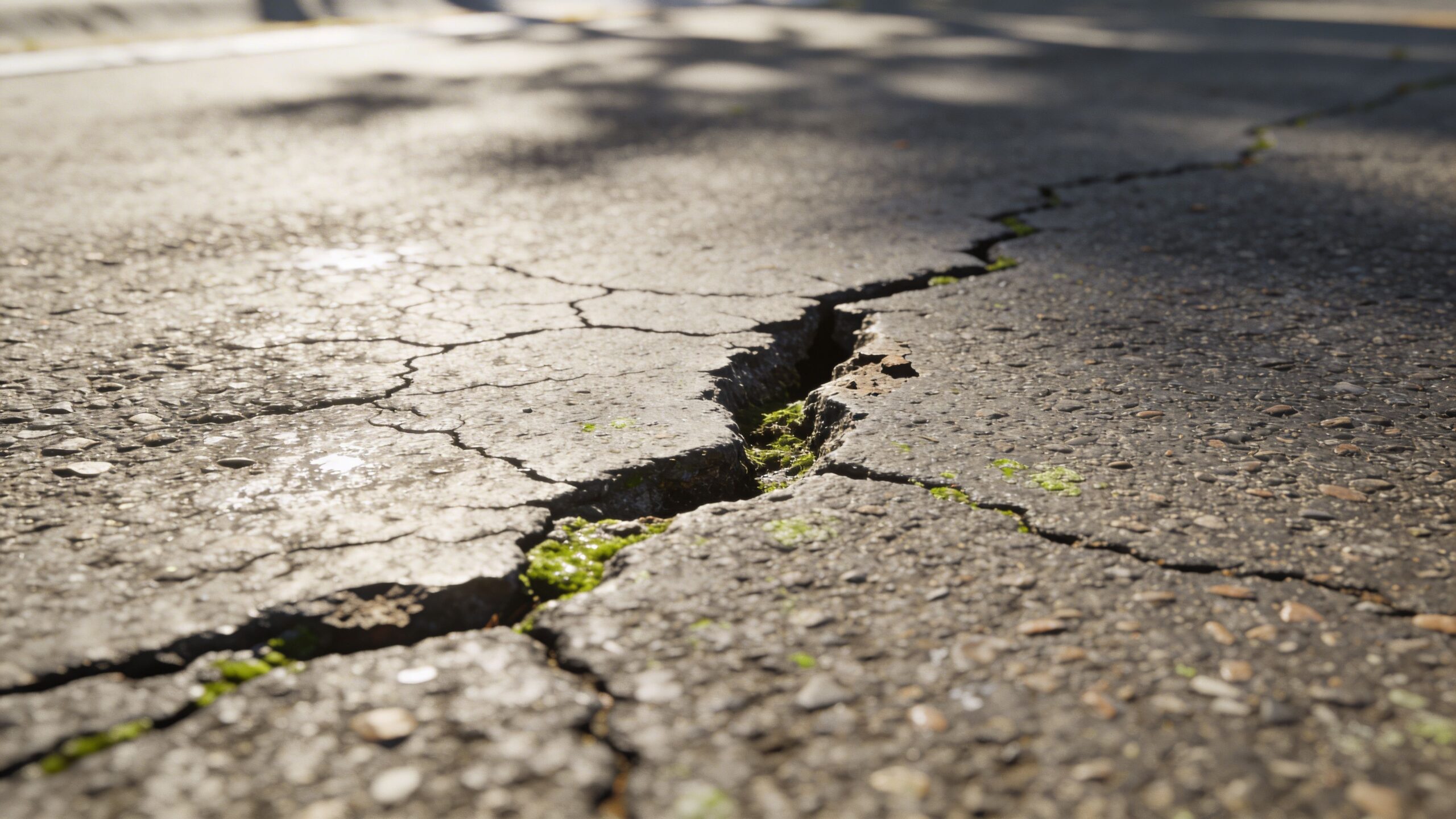
In Marion County and Citrus County, that usually means strong sun, standing water, long wet periods, heavy traffic, and subgrade movement working together. By the time you see a pothole, edge crumble, joint separation, or settled concrete panel, the underlying problem has often been active for a while.
Sun and heat dry asphalt out
Asphalt takes a beating from UV exposure and sustained heat. The binder gradually loses flexibility, the surface turns brittle, and cracking becomes easier.
That’s why seal coating has to be applied correctly, not just sprayed on for appearance. In Florida conditions, applying an asphalt emulsion sealcoat at 150°F to 180°F and at 0.15 gallons per square yard is critical for proper adhesion and a durable film, according to the Pinellas County roadway technical specifications. Those standards note that proper application can extend pavement life by 3 to 5 years.
What doesn’t work is sealing over contamination, skipping prep, or applying material outside the proper temperature range. That creates weak adhesion and uneven curing.
Water does more damage than most owners realize
Rain is never just a surface problem.
Once water gets through cracks or weak joints, it starts affecting the layers underneath. On asphalt, that often shows up later as soft spots, potholes, and recurring cracks. On concrete, it can mean settlement, edge loss, washout, and uneven slabs.
Property owners who want to understand the warning signs early should read this guide on why driveways start cracking in Florida.
Here’s a quick visual explanation of how surface failure starts and spreads:
Traffic and soil turn small defects into major repairs
Central Florida properties also deal with repetitive vehicle loading. Every delivery truck, service vehicle, and daily turn movement stresses the same areas.
The vulnerable spots are usually predictable:
- Entrances and exits: Braking and turning concentrate stress.
- Dumpster pads and service lanes: Heavier loads expose base weakness faster.
- Parking stall corners: Tight turning movement tears at worn asphalt.
- Sidewalk transitions: Poor grade or support creates trip hazards.
Pavement rarely fails because of age alone. It fails because traffic keeps loading the same weak area after water and weather have already opened the door.
That’s why local knowledge matters. In places like Ocala, Dunnellon, Hernando, and The Villages, material performance always comes back to prep, drainage, and maintenance timing.
Expert Solutions for Commercial Properties and HOAs
Commercial properties have a different standard to meet. A residential driveway can be inconvenient when it fails. A shopping center lot, church drive lane, school walkway, or HOA common area becomes a safety, liability, and access problem right away.
That’s why property managers need more than a crew that can spread material. They need a contractor who can assess the site, plan the work in the right sequence, and keep disruption under control.
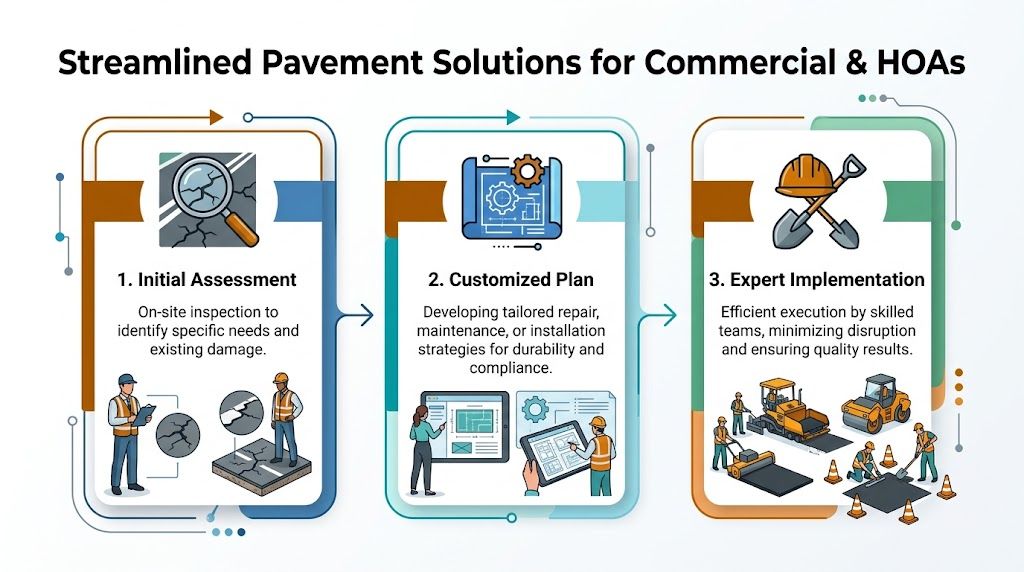
What commercial decision-makers actually need
For commercial and HOA work, the priorities are usually consistent:
- Reliable scheduling: Work has to fit tenant traffic, service access, worship schedules, or school use.
- ADA compliance: Parking layout, accessible stalls, markings, and walkways have to be handled correctly.
- Clear phasing: Repairs, replacement, seal coating, and striping must happen in the proper order.
- Long-term budgeting: Owners need a plan, not just a one-time patch.
A retail plaza in Ocala and an HOA in Inverness may look different, but both need the same discipline. Solve the root issue first. Then protect the finished surface. Then maintain it before decline becomes obvious again.
Better inspections prevent expensive surprises
Commercial lots often fail from below before the top tells the full story.
Southern Asphalt Engineering notes that ground-penetrating radar can detect over 90% of subsurface flaws such as voids or moisture pockets, and that inspection data helps determine pavement thickness, such as 4 to 6 inches for a standard parking lot, as described in their infrastructure inspection and assessment overview.
For a property owner, the lesson is straightforward. If the base is compromised, surface cosmetics won’t fix the lot. Fresh striping over hidden voids is wasted money.
Where full-service work saves time
The most efficient commercial jobs combine related scopes under one management path.
That often includes:
- Concrete replacement first for broken walks, curb transitions, pads, or access routes.
- Asphalt surface preparation next where maintenance work makes sense.
- Striping and ADA markings last so the layout is clean, visible, and compliant.
This matters for HOAs, churches, retail centers, and managed communities in places like Crystal River, Lecanto, Belleview, and The Villages because every extra subcontractor adds handoff risk. Schedules slip. Responsibility gets blurred. Small layout details get missed.
The best commercial pavement jobs don’t just look organized when they’re done. They were organized before the first truck arrived.
Why Choose a Local Marion and Citrus County Contractor
A local contractor sees problems earlier because they’ve seen the same pattern on nearby properties.
That matters more than most owners realize. Conditions shift from town to town. A driveway in Dunnellon may deal with different drainage behavior than a retail lot in Ocala. A church in Crystal River may have different traffic flow and moisture exposure than an HOA in Summerfield. Local experience helps a contractor spot those differences before they turn into callbacks.
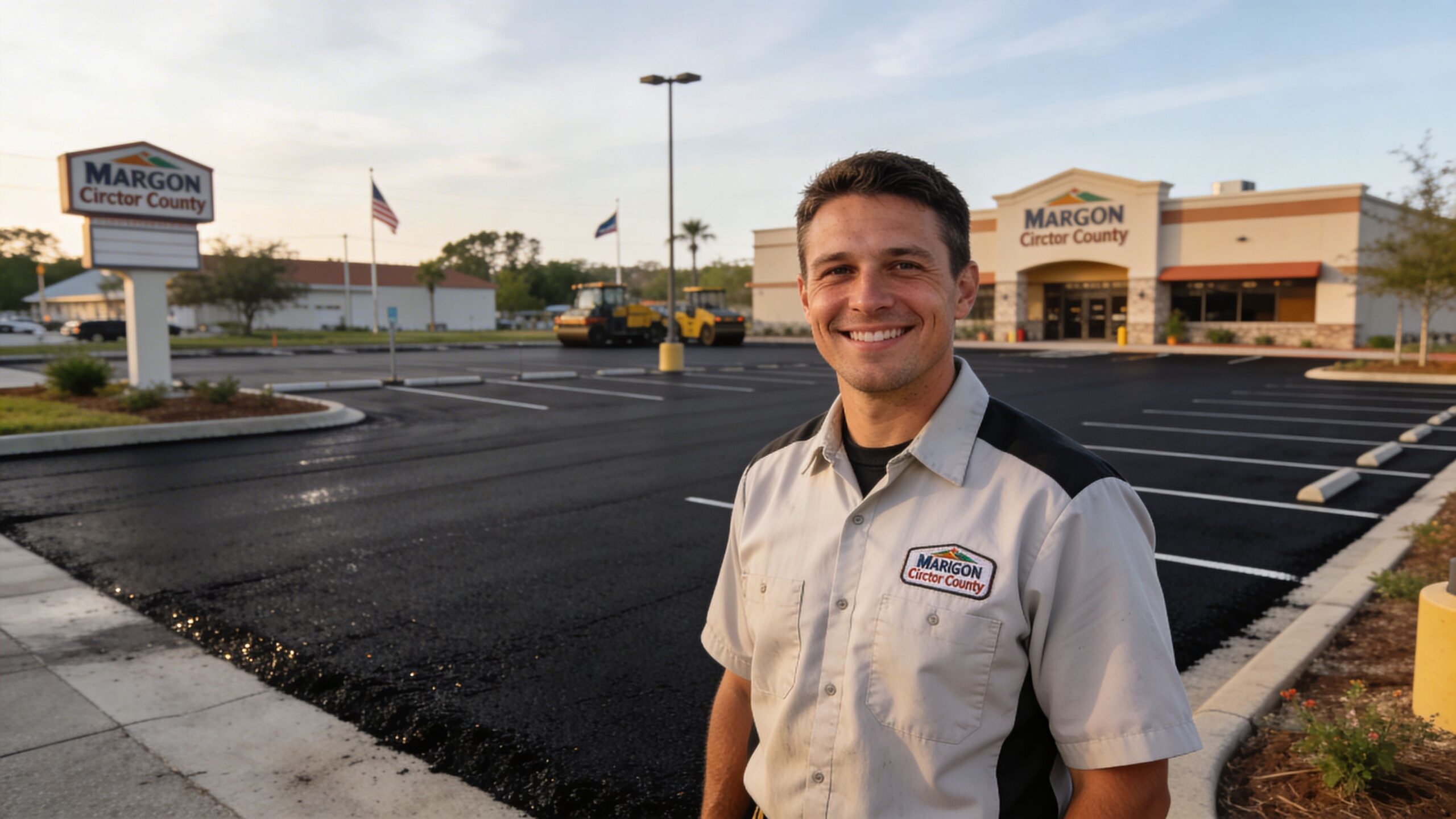
Local knowledge changes the recommendation
A contractor who works Marion and Citrus County regularly will usually make better calls on:
- When to replace instead of patch
- How to phase residential and commercial work
- What details matter for ADA-conscious walkways and parking layouts
- How Florida rain and heat affect timing, prep, and cure performance
That local judgment protects owners from generic recommendations that sound fine on paper but don’t match the site.
Full-service capability keeps the job cleaner
There’s also a practical business reason to hire a contractor that handles both concrete and asphalt services.
If one company can replace a damaged driveway, install a sidewalk, seal coat the lot, and restripe the property, the owner gets one schedule, one scope, and one line of accountability. That usually produces a smoother project and a clearer result.
For residential owners, that means less confusion during driveway replacement, patio work, or walkway installation. For commercial clients, it means fewer moving parts when concrete repairs and asphalt maintenance overlap.
What owners should ask before hiring
Before signing anything, ask direct questions:
| Question | Why it matters |
|---|---|
| Do you handle both concrete and asphalt work? | It shows whether the recommendation is broad or limited by service offerings. |
| Are you licensed and insured? | It protects the owner and confirms professionalism. |
| Can you schedule around business hours or access needs? | Commercial and HOA work depends on that flexibility. |
| Do you understand ADA-related marking and access requirements? | Mistakes here create avoidable risk. |
| Will you give a clear on-site estimate without pressure? | Good contractors don’t need confusion to make a sale. |
Local work is built on reputation. In Central Florida, owners remember who showed up on time, communicated clearly, and delivered a surface that still looks right after the first hard season.
Protect Your Investment with Riverside Sealing and Striping
The biggest takeaway is simple. Good pavement and concrete work isn’t just installation. It’s diagnosis, sequencing, material choice, and maintenance done with the property’s full life cycle in mind.
That’s what makes southern asphalt engineering useful for everyday owners in Marion County and Citrus County. It brings engineering principles down to street level. The driveway has to drain. The sidewalk has to stay safe. The parking lot has to hold up, stay visible, and remain easy to move through.
A proactive approach matters. The source material behind this topic notes that early-stage distress identification can extend pavement life by 5 to 10 years and reduce replacement costs by up to 40%, especially when moisture-related base problems are caught before they spread, as described in this Southern Asphalt Engineering healthcare facilities service page.
For owners trying to plan maintenance instead of waiting for failure, this guide on how often to seal coat asphalt in Florida is a practical place to start.
If you want long-lasting results, the right move is to evaluate the whole property. Look at the concrete, the asphalt, the drainage, the markings, and the access points together. That’s how you avoid paying twice for the same problem.
Frequently Asked Questions
How long does concrete last in Florida
Concrete can last a long time in Florida when the base is prepared correctly, drainage is handled, and the slab is installed for the actual use it will see. The bigger issue isn’t age alone. It’s whether water, settlement, or poor site prep starts undermining the slab early.
How often should asphalt be seal coated
That depends on traffic, sun exposure, drainage, and the current condition of the pavement. A lot that sees steady use in Central Florida needs periodic review, not guesswork. The right schedule comes from the surface condition, not a generic calendar answer.
Do you offer ADA-compliant striping
Yes. For commercial properties, ADA-compliant striping and related markings are a core part of professional parking lot layout work. That includes accessible spaces, directional markings, and clear visual organization for users.
Can damaged concrete be repaired or does it need replacement
Some concrete can be repaired, but many failed slabs need removal and replacement to solve the underlying problem. If the section has major cracking, movement, settlement, or edge failure, patching may only hide the issue for a short time.
Small repairs make sense when the slab is still structurally sound. They don’t make sense when the base has already lost support.
What areas do you serve in Marion and Citrus County
Service typically covers Marion County, Citrus County, and nearby Central Florida communities, including Ocala, Dunnellon, Belleview, Silver Springs, Summerfield, Crystal River, Homosassa, Inverness, Lecanto, Beverly Hills, Hernando, and The Villages.
What’s the benefit of hiring one contractor for concrete and asphalt
It simplifies the project. The work gets sequenced correctly, communication is cleaner, and the owner doesn’t have to coordinate multiple trades for related site improvements.
Do commercial properties need more than seal coating and striping
Often, yes. Many sites also need concrete replacement, walkway upgrades, layout adjustments, and a maintenance plan that fits traffic conditions and budget priorities.
For property owners who want clear answers, durable workmanship, and a no-pressure path forward, Riverside Sealing & Striping, LLC provides free on-site estimates for concrete and asphalt projects across Marion County, Citrus County, and surrounding Central Florida areas. If you need a concrete driveway, patio, sidewalk, concrete replacement, asphalt seal coating, parking lot striping, or ADA-compliant markings, the team offers practical recommendations, reliable scheduling, and long-lasting results without the runaround.