
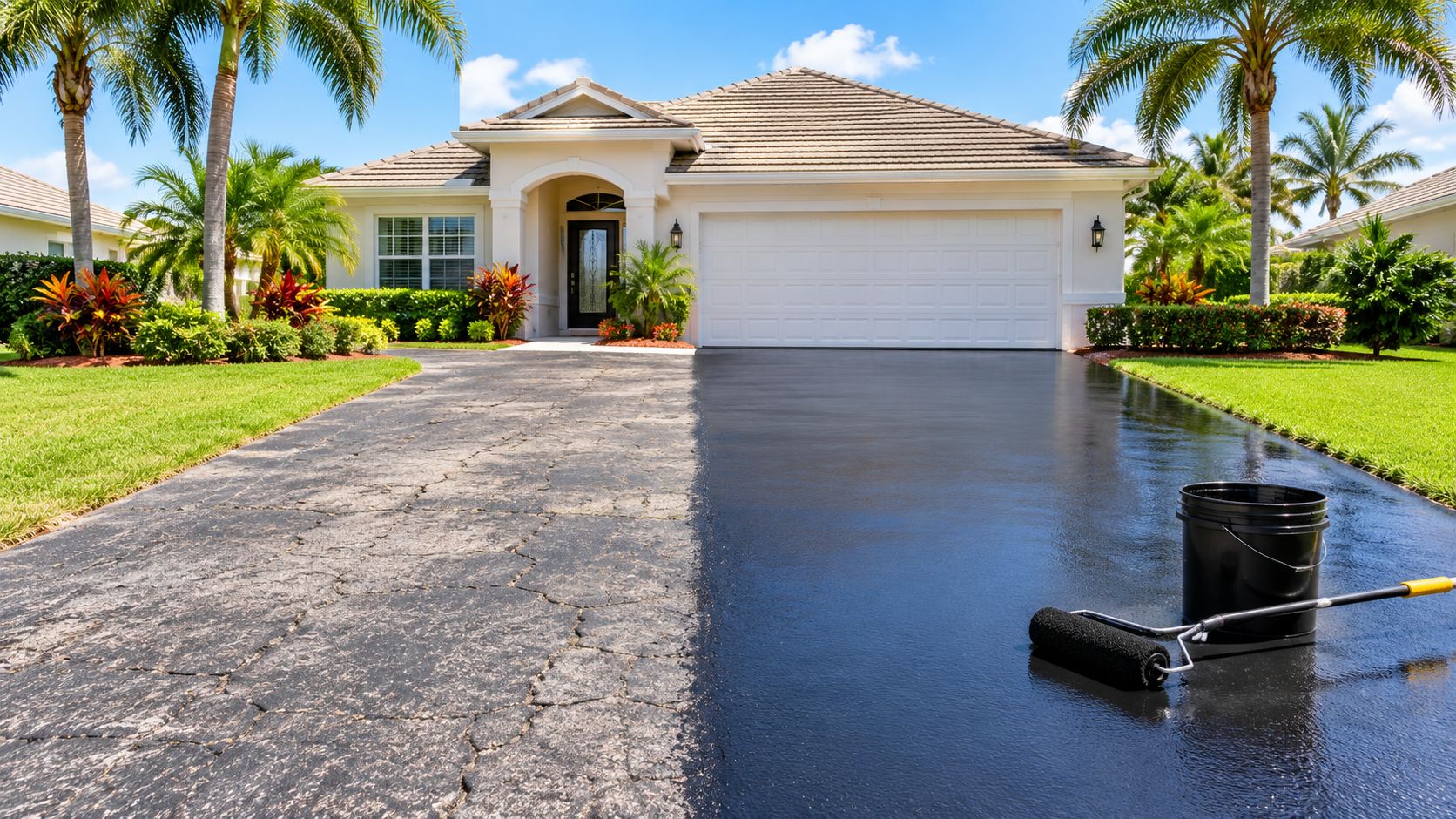
A driveway in Ocala can look fine when spring begins, then turn gray, brittle, and rough after a hot summer followed by weeks of afternoon storms. A commercial lot in Inverness may show the same pattern, with tire wear at the entrances, water collecting in low areas, and faded markings making the property look older than it is. The natural question is, which types of asphalt seal coat fit the pavement?
The answer isn't “choose the darkest sealer.” Seal coat describes a family of thin pavement-preservation systems, including fog seals, chip seals, sand seals, rejuvenating seals, and dense-graded seals. The binder may be asphalt cement, cutback asphalt, or emulsified asphalt, and each choice affects application, curing, environmental considerations, and surface performance. Texas transportation guidance identifies all three as foundational asphalt categories that can be used for seal coat and surface-treatment work.
For homeowners, HOA boards, and property managers in Marion County, FL, and Citrus County, FL, the right decision depends on more than product labels. Pavement condition, drainage, traffic, appearance, chemical exposure, and local environmental requirements all matter. This guide explains the main types of asphalt seal coat in plain language, then connects those materials to practical treatments for driveways, roads, and parking lots.
Riverside Sealing & Striping works as Concrete and Asphalt Experts in Marion and Citrus County, helping property owners think through asphalt maintenance alongside concrete driveways, patios, slabs, and sidewalks. The goal here is to help you recognize when a surface needs preservation, rehabilitation, repair, or a different solution altogether.
Table of Contents
- Introduction Why Choosing the Right Seal Coat Matters in Central Florida
- What Asphalt Seal Coat Is and How It Protects Pavement
- The Main Types of Asphalt Seal Coat and How They Compare
- Matching Seal Coat Treatments to Pavement Condition and Traffic
- How Central Florida Climate Affects Seal Coat Performance and Lifespan
- How to Choose the Right Seal Coat and Maintain It Longer
- Professional Help in Marion and Citrus County and Next Steps
Introduction Why Choosing the Right Seal Coat Matters in Central Florida
A faded driveway doesn't always need replacement. Sometimes the asphalt has lost its rich color and surface protection, but the underlying pavement remains serviceable. In that situation, an appropriate seal coat can help slow moisture entry, protect the binder from exposure, and improve the property's appearance. Applying the wrong treatment, however, can leave you with poor adhesion, loose aggregate, premature wear, or a finish that doesn't suit the pavement.
Central Florida makes that decision more important. Ocala, Dunnellon, Belleview, Silver Springs, Summerfield, and The Villages experience strong sun, heat, rain, and regular vehicle movement. Citrus County properties around Crystal River, Homosassa, Inverness, Lecanto, Beverly Hills, and Hernando face the same broad maintenance challenge, with additional attention often needed around drainage and moisture.
Practical rule: Seal coat is preventive maintenance, not a substitute for structural asphalt repair.
A surface with isolated hairline cracking may be a good candidate for a thin preservation treatment. A surface with deep interconnected cracking, failed edges, potholes, or unstable areas needs repair before anyone applies a protective coating. Seal coat can protect sound pavement, but it can't rebuild a failed base.
The phrase types of asphalt seal coat can create confusion because people use it to describe both the sealer chemistry and the treatment method. Coal-tar emulsion, asphalt emulsion, and acrylic-modified products are material categories. Fog seal, chip seal, slurry seal, and microsurfacing describe treatment systems that may use different binders and aggregates. Matching those two ideas is the key to making a sound decision.
What Asphalt Seal Coat Is and How It Protects Pavement
A Central Florida driveway can look sound in the morning, then face intense sun, heat, rain, and daily traffic by evening. Seal coat works like sunscreen for asphalt. It adds a protective surface layer that helps slow damage from ultraviolet exposure, water, oxidation, traffic wear, and certain spills. It cannot rebuild a failed pavement base, so the treatment must match the pavement's condition and the traffic it carries.
A typical application follows this sequence:
- The contractor cleans the pavement and removes loose material.
- Cracks, potholes, oil spots, and failed areas receive the needed repairs.
- The selected binder or treatment goes down in a thin, even layer.
- The material cures through drying, chemical setting, or both.
- Traffic returns after the surface develops adequate strength.
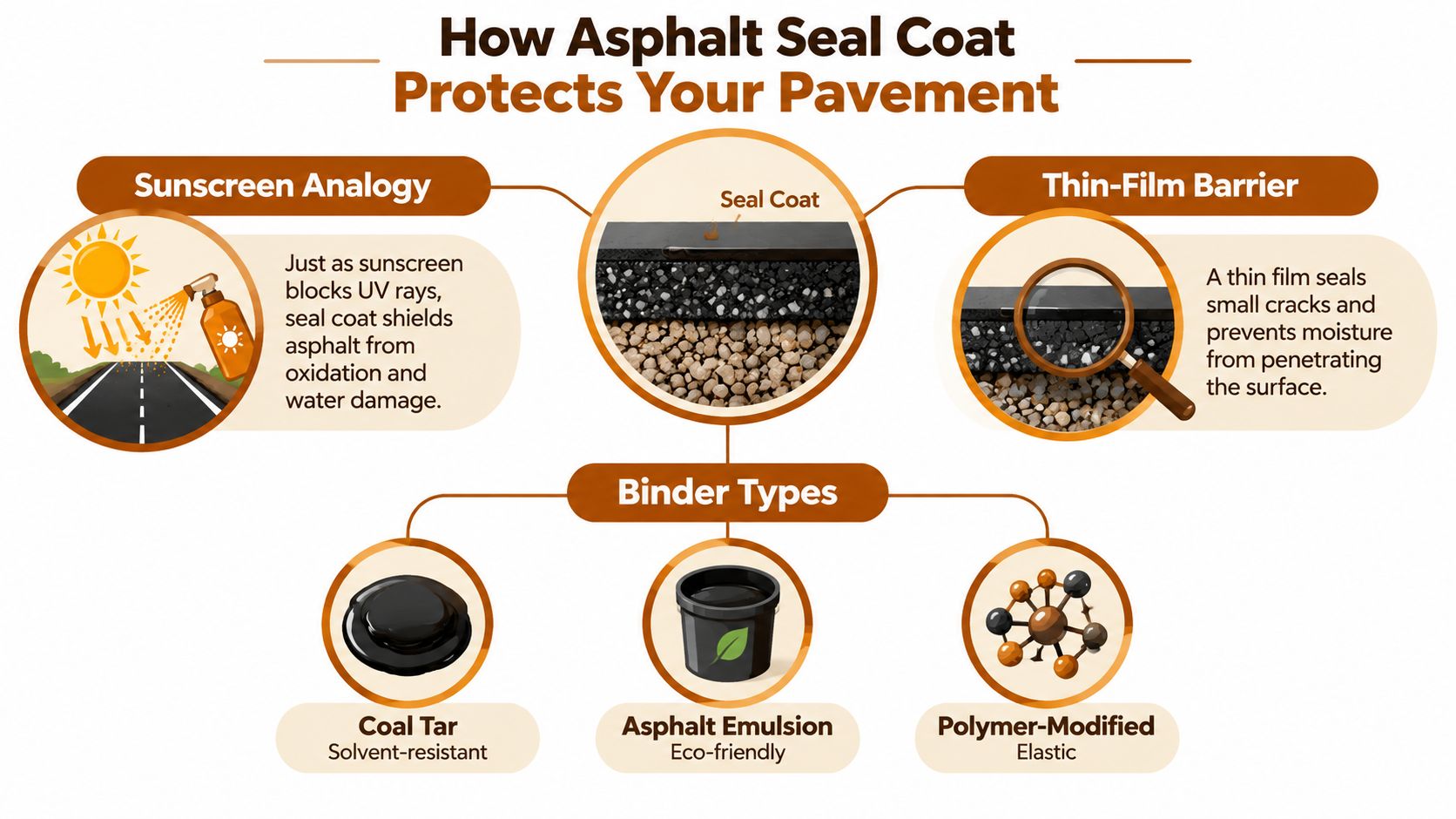
The three foundational binder categories
Asphalt cement is the original asphalt binder category. It can serve as the base for surface treatments, while the final design determines how the binder is applied and how it works with aggregate.
Cutback asphalt combines asphalt cement with a petroleum solvent, making spraying and application easier. Guidance describes cutbacks as typically containing about 85% asphalt cement and 15% solvent by weight. Their use has declined because the solvent evaporates into the atmosphere, creating air-pollution and health concerns. Transportation guidance from Texas covers the historical role of cutbacks and the move toward emulsions.
Emulsified asphalt suspends asphalt cement in tiny water droplets with an emulsifier. As the water evaporates, the droplets join and form a continuous asphalt film. A materials reference describes emulsions as generally about two-thirds asphalt cement, with the balance made up of water and emulsifier. This asphalt materials bulletin explains why emulsions work at ambient or slightly high temperatures without the solvent emissions associated with cutbacks.
Why product names vary
Modern seal coats include chip seals, sand seals, fog seals, rejuvenating seals, and dense-graded seals. These names describe a family of treatment systems, not one identical product. Some create a thin film over existing asphalt. Others add aggregate to restore texture, improve waterproofing, or address surface wear.
The practical question is what the treatment must accomplish, how it cures, and whether the existing pavement can support it. A product that appears suitable on paper may perform poorly on a cracked, wet, heavily trafficked, or chemically exposed surface.
The Main Types of Asphalt Seal Coat and How They Compare
A driveway beside a busy storefront faces a different burden than a lightly used residential lane. Both may need sealing, but Central Florida's heat, intense UV exposure, rain, and traffic can make one treatment a better fit than another. The useful comparison is not which brand sounds strongest. It is which seal coat family matches the pavement's condition and the work it must handle.
Property owners commonly encounter coal-tar emulsion, asphalt emulsion, and acrylic or latex-modified products. Contractors may also specify polymer-enhanced, silicone or urethane-enhanced, and hot rubberized systems for more specific performance needs.
Coal-tar emulsion has traditionally been selected for resistance to fuel and chemical exposure. That benefit comes with stronger odor and greater regulatory scrutiny related to polycyclic aromatic hydrocarbons. Availability varies by jurisdiction, so coal tar is not a universal option. Industry guidance on seal coat application and material selection describes the growing preference for lower-odor asphalt emulsion in many residential and public-facing settings.
Asphalt emulsion carries asphalt in water rather than in a solvent. It generally produces a lower-odor application and is widely used for residential driveways, parking areas, and other public-facing pavement. Its water-based curing process allows the asphalt droplets to join as the carrier evaporates. That makes the material practical for many routine maintenance applications, although severe weather, heavy traffic, and poor surface preparation can shorten its service life.
Acrylic and polymer-modified sealers add resin or polymer components to improve flexibility, appearance, UV stability, curing behavior, or traffic resistance. Silicone and urethane enhancements may suit surfaces where water shedding or chemical exposure deserves special attention. Hot rubberized systems focus on flexibility and crack movement, but their heated application requires controlled equipment and trained handling.
| Seal Coat Type | How It Cures | Key Strengths | Limitations | Best Use Case |
|---|---|---|---|---|
| Coal-tar emulsion | Water evaporates and the emulsion sets | Strong fuel and chemical resistance | Odor and PAH-related restrictions | Commercial areas where legally permitted and chemical exposure is a primary concern |
| Asphalt emulsion | Water evaporates as asphalt droplets coalesce | Lower odor, broad acceptance, ambient-temperature application | May need more frequent maintenance in severe conditions | Residential driveways, public-facing properties, and general parking areas |
| Acrylic or polymer-modified | Water or carrier evaporates while the modified film develops | UV stability, flexibility, appearance, and enhanced durability | Higher material cost and more specific application requirements | High-visibility properties and heavier-use surfaces |
| Silicone or urethane-enhanced | Carrier evaporates and the modified coating sets | Water resistance and specialized chemical performance | Requires careful specification and surface preparation | Areas needing targeted performance beyond standard emulsion |
| Hot rubberized systems | Heated material cools and forms a flexible seal | Crack movement tolerance and strong flexibility | Heated application requires trained crews and equipment | Pavements with movement-related cracking or demanding maintenance conditions |
Chemistry is only one part of the decision. The same binder can be applied as a thin preventive film, combined with aggregate for texture, or incorporated into a treatment designed for a more weathered surface. For a broader selection framework, see the guide to choosing the best seal coat for asphalt.
Matching Seal Coat Treatments to Pavement Condition and Traffic
The best treatment starts with a pavement diagnosis. Preventive maintenance protects an asphalt surface that still has adequate structure. Surface rehabilitation adds material, texture, or leveling capacity when the surface has more visible wear. Applying a preventive film to pavement that needs rehabilitation usually produces a temporary cosmetic improvement rather than a durable repair.
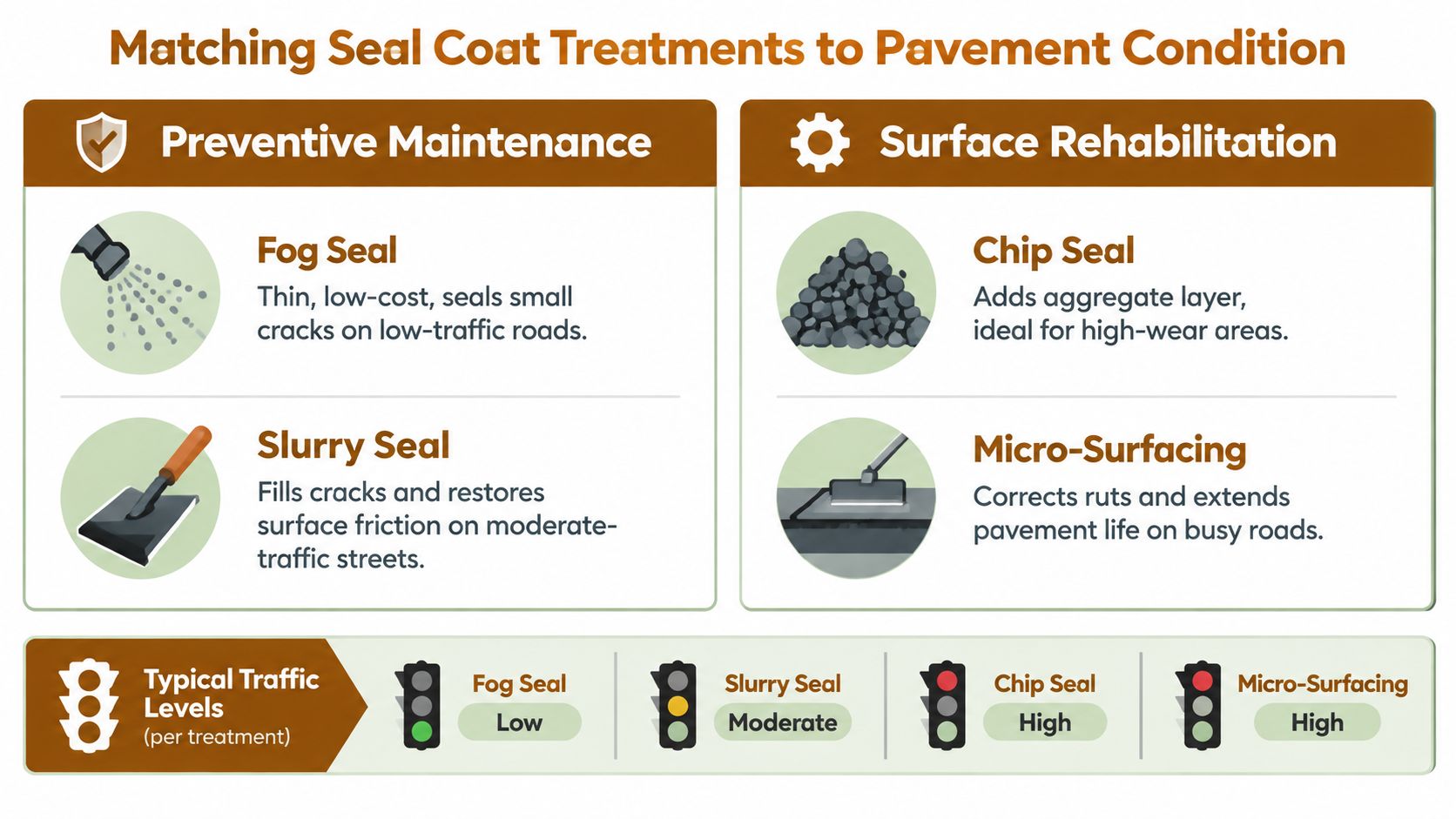
A fog seal is a light application of diluted asphalt emulsion. It can close small surface voids, refresh a dry-looking pavement, and reduce moisture entry on a sound, lower-traffic surface. It won't correct rutting, substantial cracking, or widespread aggregate loss.
A sand seal combines asphalt binder with sand or fine aggregate. It can provide texture and help seal a weathered surface without the larger stone profile associated with a chip seal. A rejuvenating seal takes a different approach by helping restore flexibility to aged asphalt near the surface, rather than acting only as a coating. Dense-graded seals use a tightly graded aggregate structure to produce a more uniform surface.
When chip seal is the better choice
A chip seal is aggregate-forward. The contractor sprays asphalt emulsion, immediately spreads graded stone chips, and rolls the surface so the aggregate becomes the wearing course. The chips restore surface texture while the binder helps waterproof the pavement. State maintenance guidance recognizes single, double, and triple chip seals, along with cape and scrub-seal variations. California's flexible pavement preservation guidance explains these treatment families and their relationship to pavement condition.
Chip seal often makes more sense than slurry seal when the surface needs a durable aggregate layer and stronger texture. A coarse 3/8-inch chip seal is associated with pavements experiencing more minor distress, while a fine 1/4-inch seal suits surfaces with little to no distress. Fast-setting emulsions such as CRS-2 are commonly specified because the binder must hold the chips under traffic. A slower tack-coat emulsion isn't used for that same chip-retention purpose.
Slurry seal places a mixture of emulsion, fine aggregate, mineral filler, and water over the surface. It creates a smoother finish than chip seal and works well for lower-level surface wear. Microsurfacing is a higher-performance treatment that can address more demanding surface conditions, including certain rutting and leveling needs, while cape seal combines a chip seal with a slurry or microsurfacing layer.
The decision rule is straightforward:
- Sound, dry, lightly worn pavement: Consider a fog, sand, or rejuvenating seal.
- Surface needing texture and waterproofing: Consider chip seal.
- Moderate wear where a smoother finish matters: Consider slurry seal.
- Busy pavement needing surface correction: Evaluate microsurfacing.
- Chip seal needing a smoother finish: Consider a cape seal.
- Localized surface problems with embedded debris or difficult texture: A scrub seal may be appropriate after professional evaluation.
These treatments aren't interchangeable. Traffic speed, turning movements, pedestrian expectations, noise tolerance, and the desired return-to-traffic time all influence the specification. Forest Service surface-treatment guidance presents seal coat as a broad treatment family and recognizes microsurfacing and cape seals as higher-performance options.
How Central Florida Climate Affects Seal Coat Performance and Lifespan
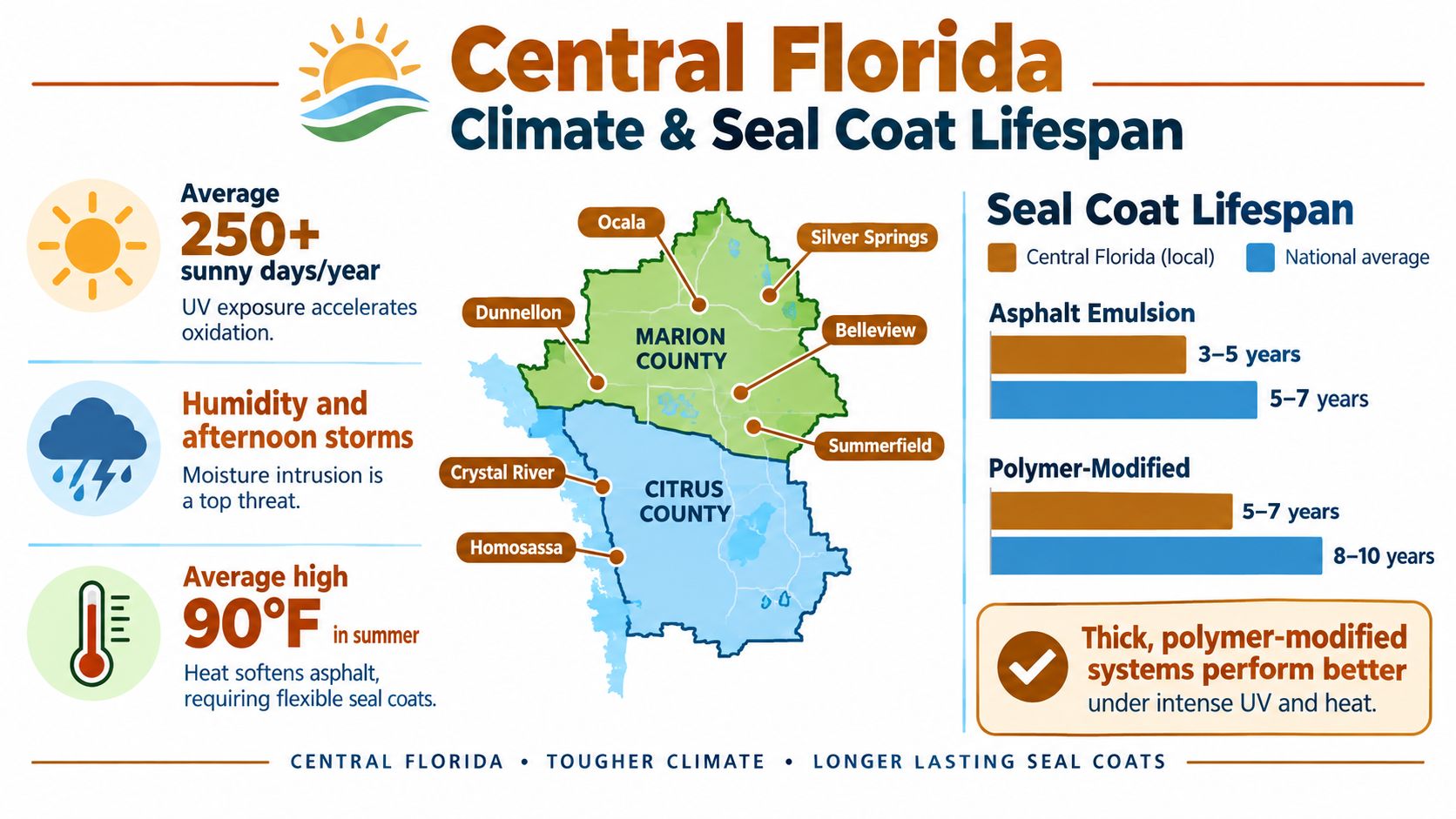
A seal coat that works in a mild, dry region may need a different treatment in Central Florida. Heat, ultraviolet exposure, humidity, rain, and traffic act together. Sunlight oxidizes unprotected asphalt, heat can soften the surface, and water enters through cracks and weak edges. Tires then grind loose particles into the pavement, especially near entrances, exits, and turning areas. Seal coat selection therefore depends on pavement condition and traffic, with local heat, UV, and rain serving as the decision filter.
The same pattern appears across Marion County, FL, and Citrus County, FL. A residential driveway in Summerfield may need a different finish from a busy commercial lot in Ocala. A property near Crystal River or Homosassa may require closer attention to drainage and moisture. Similar considerations apply in Dunnellon, Belleview, Silver Springs, Inverness, Lecanto, Beverly Hills, Hernando, and The Villages.
Why emulsions fit many Florida projects
Emulsions are common binders in seal coat specifications because crews can apply them at ambient or slightly higher temperatures without the solvent emissions associated with cutback products. Cutback asphalt was once widely used because solvents improved sprayability, but air-pollution and health concerns reduced its use over time.
That does not make every emulsion suitable. The contractor still needs to assess pavement dryness, weather, drainage, traffic, and the required cure. A flexible polymer-modified system may better fit heavy traffic or intense exposure, while a simpler asphalt emulsion may suit a sound residential driveway. The treatment family should match the pavement's needs, rather than being chosen by brand name alone.
Timing matters more than a calendar alone
A fixed resealing interval cannot account for every Florida property. Inspect annually for fading, open cracks, raveling, standing water, edge breakup, and wear in turning lanes. Reapply according to pavement condition and the selected system's requirements, not an automatic schedule copied from another property.
Weather timing matters too. Choose a dry application window and allow the coating to cure before traffic returns. Property managers should coordinate seal coating with parking lot striping, so fresh markings are not removed or covered during later maintenance. Review this guide to asphalt seal coat drying time before scheduling work around residents, customers, deliveries, or staff.
How to Choose the Right Seal Coat and Maintain It Longer
Start with the pavement, not the brand name. A useful evaluation asks six questions:
- How old and stable is the asphalt? New pavement needs time to develop and release initial oils before a preservation coating is considered.
- What type of cracking is present? Fine surface cracks may fit preventive maintenance. Structural cracks, potholes, alligator cracking, and failed areas need asphalt repair first.
- Does water stand on the surface? Seal coat won't solve a drainage problem. Low areas and blocked runoff paths must be addressed before coating.
- How much traffic does the pavement carry? A residential driveway, HOA road, church lot, and shopping-center entrance don't place the same demands on the surface.
- What finish does the property require? Chip seal provides aggregate texture, while slurry and microsurfacing generally create smoother surfaces. Appearance, noise, skid needs, and pedestrian use all matter.
- What do local rules allow? Coal-tar products may face PAH-related restrictions, making asphalt emulsion the practical choice for some public-facing properties.
Acrylic or polymer-modified products can justify their higher cost when UV stability, flexibility, appearance, or heavy-traffic durability matters. A basic emulsion may be appropriate when the pavement is sound and the primary goals are moisture protection, improved appearance, and routine preservation. The cheapest material isn't always the lowest-cost decision if it doesn't fit the site.
Maintenance practices that protect the investment
Keep the surface clean, remove vegetation at the edges, and address oil or fuel contamination before coating. Fill suitable cracks while they're manageable, repair potholes promptly, and correct drainage issues instead of sealing over standing water. Schedule work around favorable weather, and don't reopen the pavement until the coating has cured adequately.
Coordinate related work with the same maintenance plan. Asphalt sealcoating protects the pavement surface, parking lot striping restores traffic organization and accessibility markings, and concrete work may be needed for damaged sidewalks, aprons, patios, or driveways. A single site review can reveal where these scopes overlap and where they should remain separate.
Professional Help in Marion and Citrus County and Next Steps
DIY seal coating can work on a small, clean, sound surface when the owner has the right equipment and understands preparation. It becomes riskier when the pavement has oil contamination, drainage problems, structural cracking, multiple treatment options, or commercial traffic. A coating applied over unstable asphalt may hide the problem briefly while allowing the underlying failure to continue.
Riverside Sealing & Striping, LLC is a third- and fourth-generation family-owned contractor based in Dunnellon, serving Marion County, Citrus County, and surrounding Central Florida communities. The team evaluates asphalt condition, preparation needs, crack sealing, pothole patching, oil contamination, moisture concerns, and the relationship between seal coating and striping. Its work also includes concrete driveway replacement, patios, slabs, sidewalks, and ADA-compliant parking lot improvements. Learn more about asphalt seal coat contractors and the type of evaluation a professional project requires.
The company is licensed and insured, offers reliable scheduling, and provides no-pressure on-site consultations and estimates from 7am to 7pm. For homeowners, HOAs, churches, schools, nonprofits, commercial property managers, and investors, professional preparation can support safer surfaces, better appearance, and long-term maintenance savings.
Riverside Sealing & Striping, LLC provides professional asphalt seal coating, pavement preparation, parking lot striping, concrete driveways, patios, slabs, and sidewalks across Marion and Citrus County. Visit Riverside Sealing & Striping, LLC to request a free, no-pressure evaluation and discuss the right seal coat treatment for your Central Florida property.