
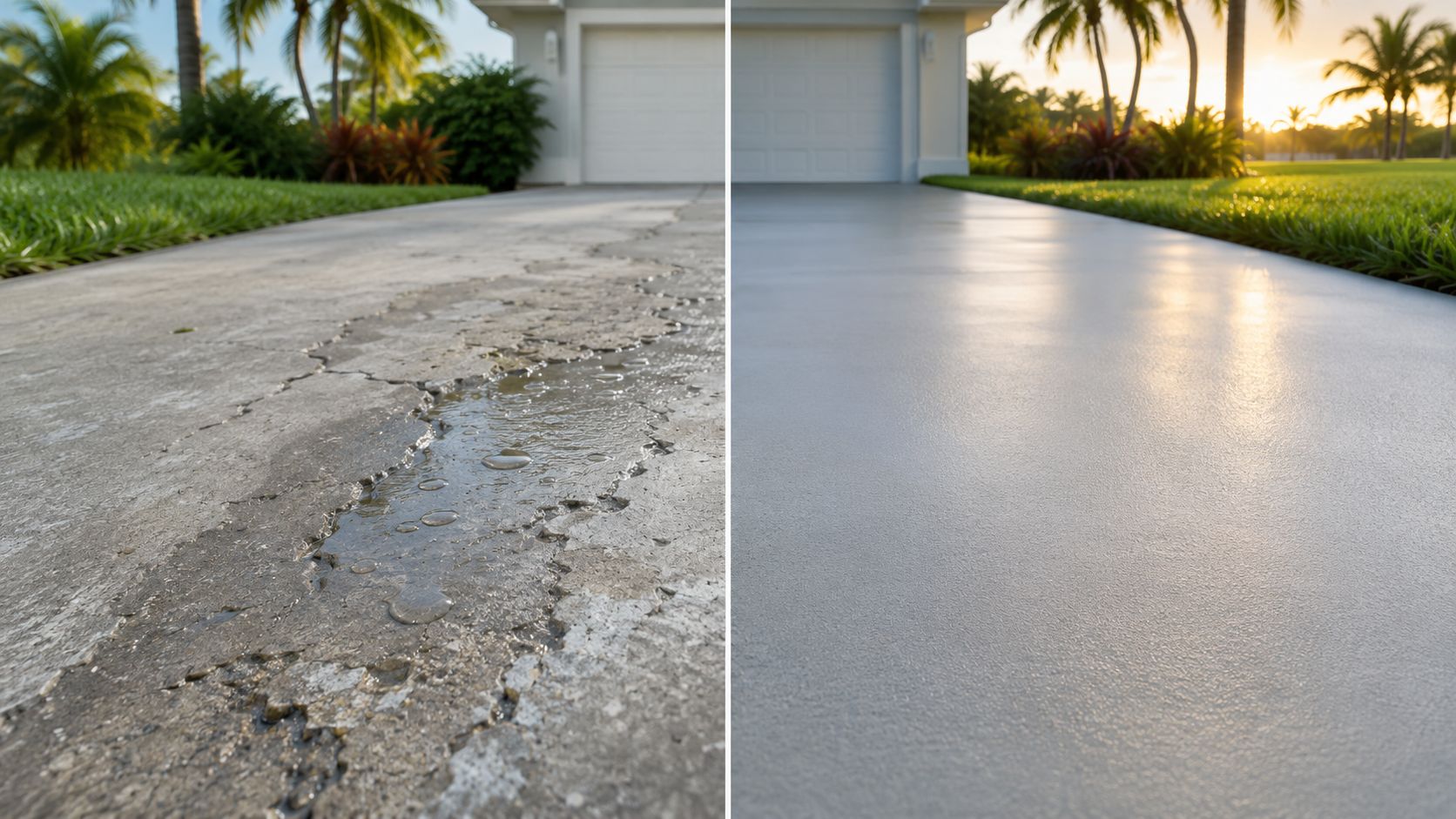
You walk outside after a week of hard rain and notice your driveway looks darker in one area than the rest. Maybe the patio feels rougher underfoot. Maybe there's a white chalky residue near the slab edge, or a crack that seems a little wider than it used to. Most homeowners in Central Florida don't worry about that right away. They should at least pay attention.
Water damage to concrete usually starts subtly. It rarely announces itself with one dramatic failure. More often, homeowners in Ocala, Dunnellon, Belleview, Silver Springs, Summerfield, Crystal River, Homosassa, Inverness, Lecanto, Beverly Hills, Hernando, and The Villages see small surface changes first, then bigger repair decisions later.
For homes across Marion County, FL and Citrus County, FL, the primary question isn't just whether water is damaging the concrete. It's whether you're looking at a cosmetic issue, damage that can be stabilized and resurfaced, or a slab that has moved far enough that replacement is the smarter call. That middle category gets overlooked all the time, and it matters because a lot of homeowners assume the only choices are a cheap patch or a full tear-out.
Table of Contents
- How Water Secretly Destroys Concrete
- Visual Clues Your Concrete Has Water Damage
- Florida's Climate The Unseen Accelerator
- Repairing Concrete Water Damage DIY vs Professional
- Proactive Strategies for Concrete Protection
- Your Local Experts for Concrete and Asphalt Solutions
- FAQ
How Water Secretly Destroys Concrete
Concrete looks dense, but it isn't waterproof. It has pores, capillaries, and tiny pathways that let moisture move inside. That's why water is such a serious threat. Water is the single most destructive agent affecting concrete structures, because it acts as both a chemical reagent and the solvent that allows corrosion, leaching, and other damaging reactions to keep going, as explained in this overview of concrete degradation.
Concrete acts more like a hard sponge than a solid rock
A simple way to understand it is this. Concrete behaves like a hard sponge. It may feel solid on top, but it can still absorb and hold water below the surface.
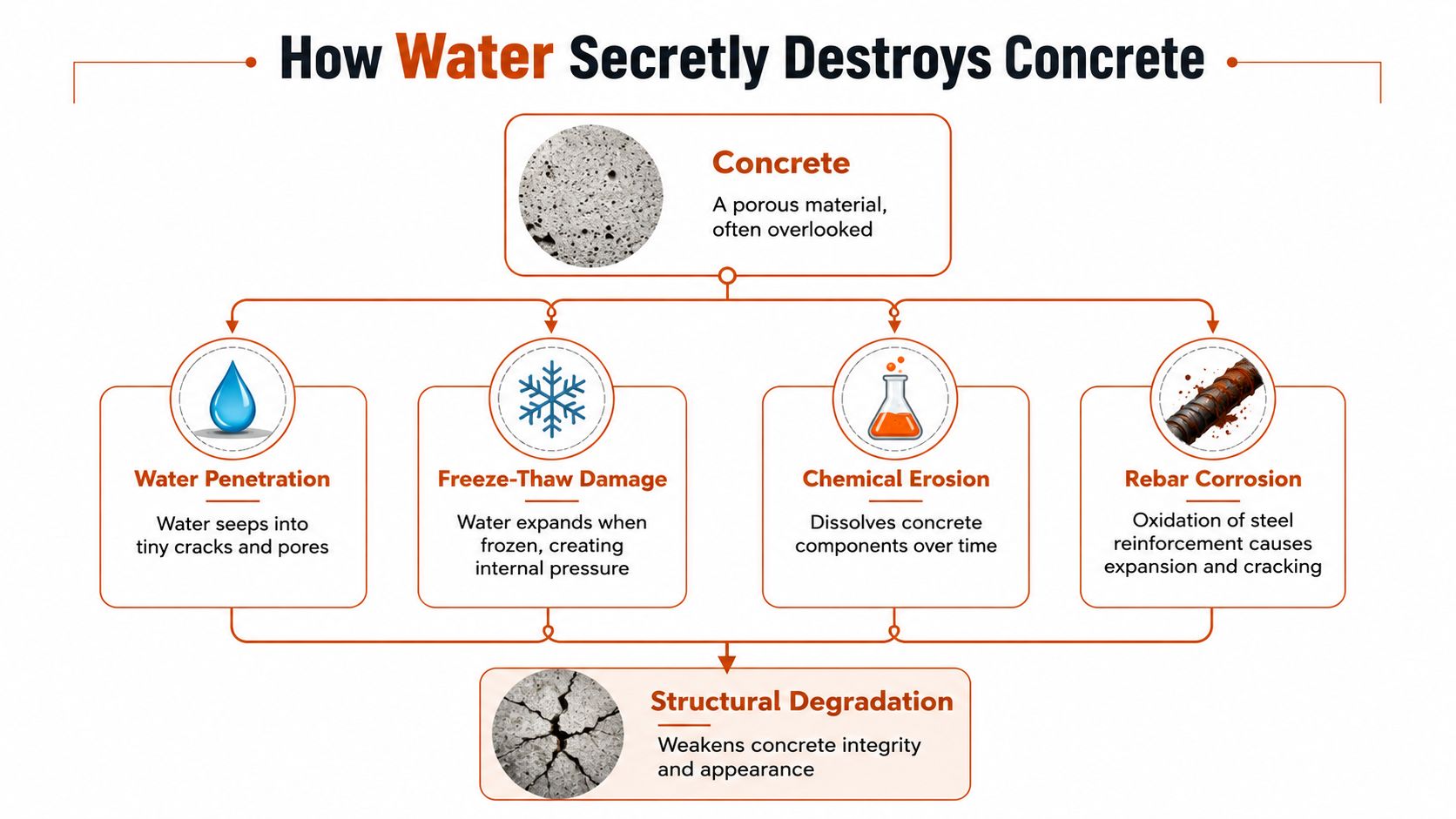
Too much water can start the problem before the slab is ever put into service. Excessive water in the initial concrete mix is a primary cause of long-term damage, because it increases porosity. Once that concrete cures, water soaking into those pores can dissolve and leach out calcium hydroxides, weakening the cement binder over time. That same source notes foundation repair can run $5,000 to $25,000 or more when damage advances far enough to require major correction, as described in this report on causes of concrete damage.
If you're seeing flaking or peeling on the surface, it helps to understand what concrete spalling means in practical terms. Surface loss is often the visible part of a problem that started below the finish.
Practical rule: If the surface is breaking down in multiple areas, don't assume the issue is only cosmetic. Water usually leaves clues on top after it has already moved through the slab.
Ground pressure turns moisture into a structural problem
In Central Florida, the problem isn't only rain from above. Water also builds up in the soil around slabs and foundations. When soil stays saturated, it creates hydrostatic pressure that pushes moisture into concrete from the side or from below.
That pressure can widen weak points, feed existing cracks, and keep the slab damp for long stretches. On a driveway, that may show up as edge deterioration or pitting. On a patio or walkway, it may show up as recurring stains, loose patch material, or sections that never seem to dry evenly.
This is why a quick surface patch often fails. If the moisture source is still active, the concrete keeps taking on water and the damage keeps progressing.
Visual Clues Your Concrete Has Water Damage
Most homeowners don't need lab equipment to spot early water damage to concrete. They need to know what they're looking at. The slab usually gives a warning before major failure.
What surface damage is telling you
Some signs are straightforward. Others get dismissed as “just age.”
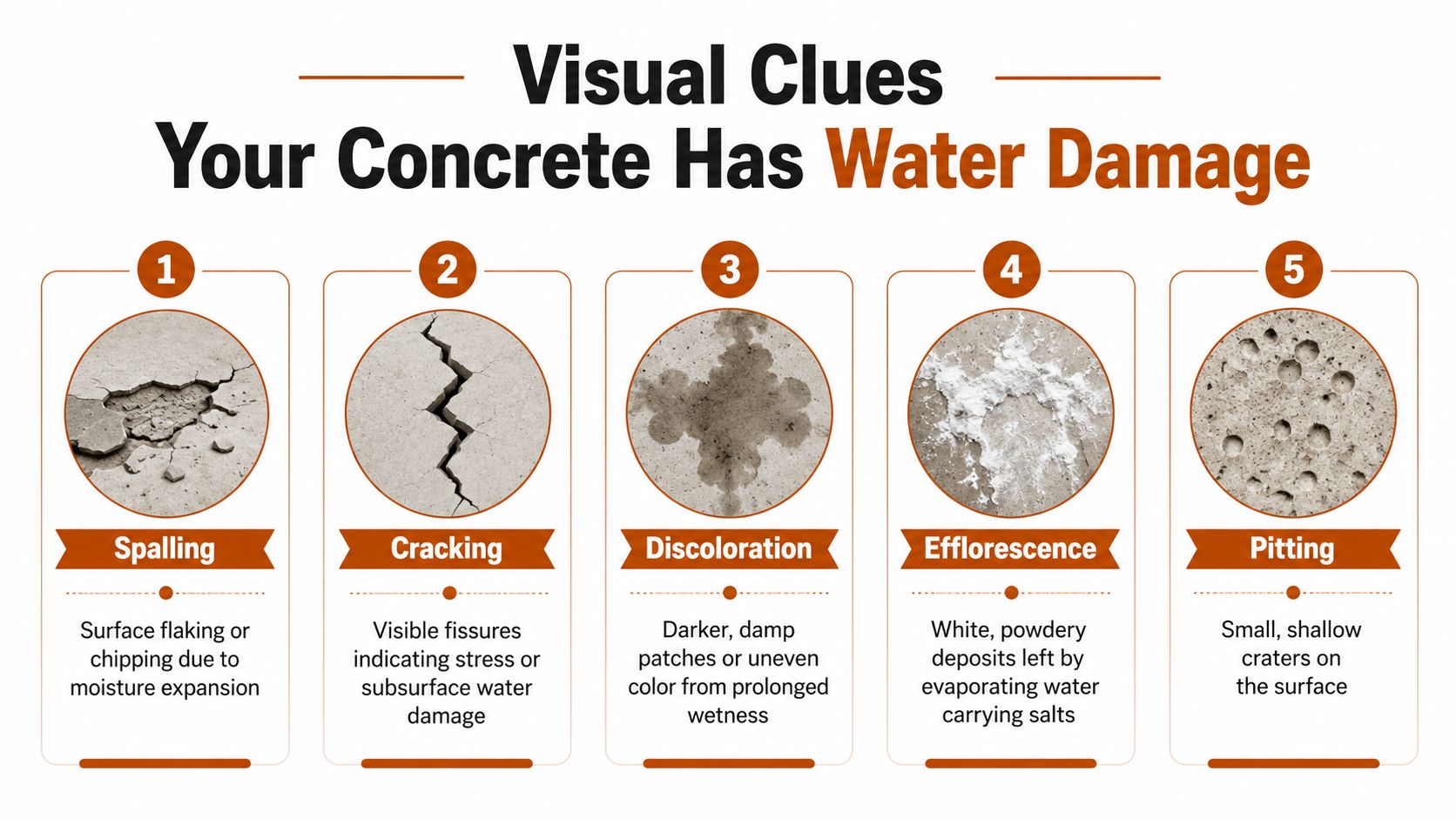
- Spalling or flaking: The top layer starts chipping, peeling, or popping off. Moisture gets into the surface, then the concrete loses bond near the top.
- White powdery residue: That's efflorescence. Water moves through the slab, carries salts to the surface, then leaves the deposit behind as it evaporates.
- Dark patches or uneven color: Areas that stay darker longer can point to trapped moisture, drainage issues, or a leak source nearby.
- Pitting: Small shallow holes often show up where the surface has been weakened repeatedly by water intrusion.
- Mildew or algae near slab edges: In shady or damp areas around patios and walks, constant moisture can support biological growth even if the slab still feels hard.
A lot of homeowners also need help sorting ordinary hairline cracking from something more active. If that's what you're seeing, this guide on why driveways crack is a useful reference point.
A quick way to sort cosmetic from serious
Here's the field version many contractors use when walking a property:
| Sign you see | What it often suggests | First response |
|---|---|---|
| Light surface discoloration | Moisture exposure or poor drying | Check drainage and monitor |
| Powdery white deposits | Water movement through concrete | Look for ongoing moisture source |
| Surface flaking in isolated spots | Top-layer breakdown | Evaluate for resurfacing |
| Cracks that are widening or uneven | Movement or deeper stress | Get a professional assessment |
| Exposed steel or deep breakouts | Structural deterioration | Plan for structural repair or replacement |
Water doesn't just stain concrete. It enables the reactions that weaken it from the inside.
That's the point many homeowners miss. The stain, residue, or chip isn't the actual problem. It's the evidence that water is moving where it shouldn't.
Florida's Climate The Unseen Accelerator
Concrete in Central Florida doesn't need a northern winter to get into trouble. Moisture is enough.
Why Central Florida concrete stays under stress
In colder climates, freeze-thaw damage happens when absorbed water freezes and expands by 9% relative to its liquid volume. But that mechanism depends on concrete being near saturation. In humid and coastal regions like Florida, the bigger issue is the constant presence of moisture, which lets chlorides and other contaminants move into the concrete and corrode reinforcing steel even without freezing, as described in this discussion of water damage in concrete foundations.
That matters in Marion County, FL and Citrus County, FL because our slabs spend a lot of time wet, damp, or slow to dry. Afternoon storms, long humid stretches, sprinkler overspray, and poor runoff patterns can keep concrete in that danger zone far longer than many homeowners realize.
What that means for local slabs and foundations
In places like Dunnellon, Summerfield, and Inverness, repeated wetting can keep patios and sidewalks saturated around the edges. In Crystal River and Homosassa, salt exposure adds another concern for reinforced concrete. In Ocala and Belleview, hard summer rain can overload spots where the grading already pitches water back toward the slab.
The sun doesn't cancel out the moisture problem. It often makes it more deceptive. The surface may look dry by afternoon while the slab still holds moisture below.
If you're wondering how much local conditions affect lifespan, how long concrete lasts in Florida conditions depends heavily on water control, not just on age.
Repairing Concrete Water Damage DIY vs Professional
Often, homeowners waste money. They buy a crack filler or patch kit for a problem that isn't really a patching problem.
When a homeowner fix makes sense
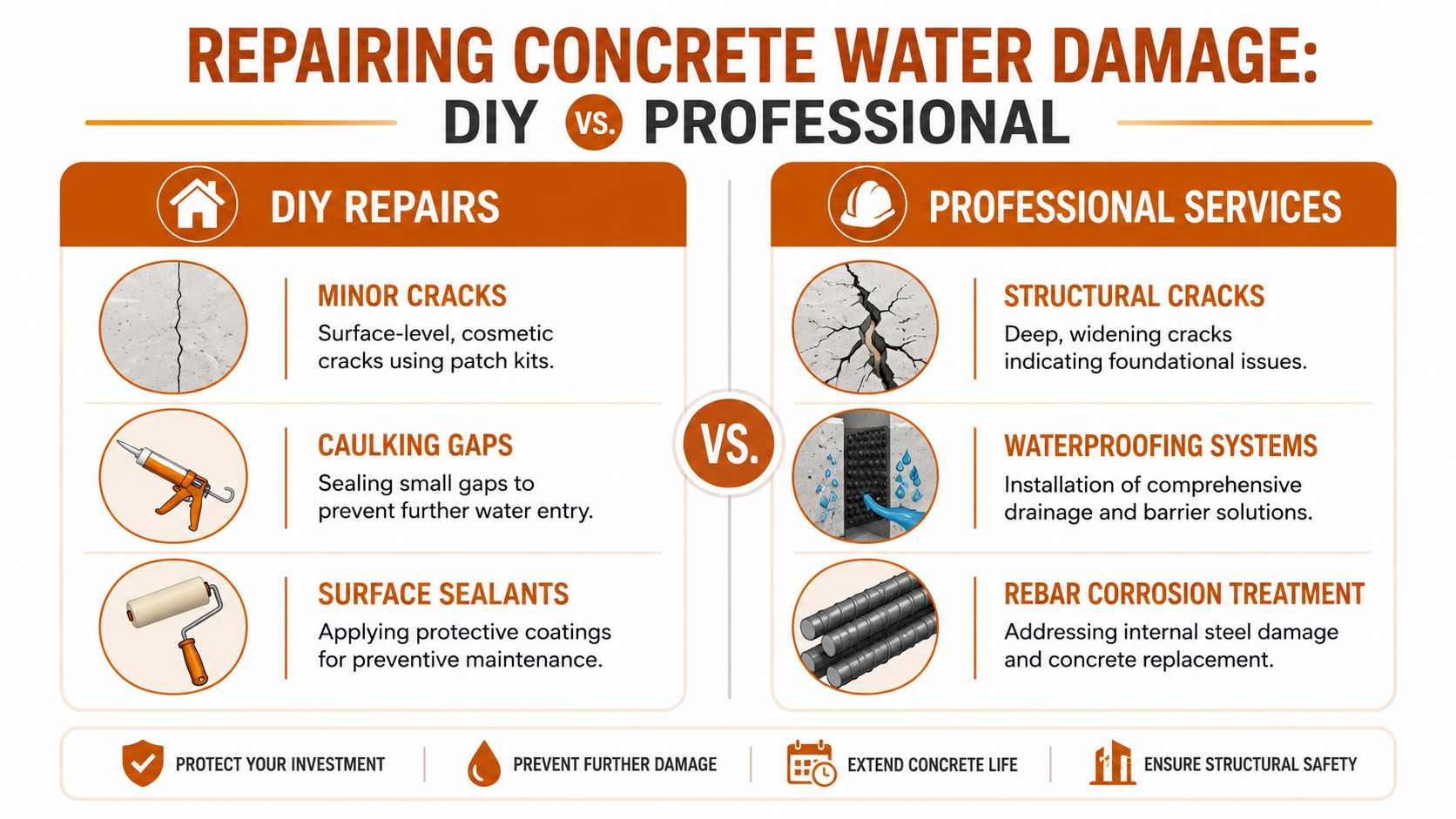
DIY repair has a place. If the issue is minor, stable, and clearly cosmetic, a homeowner can often handle basic maintenance.
Good DIY candidates include:
- Small surface-only cracks: These can often be filled to reduce water entry and improve appearance.
- Tiny open joints or gaps: Sealing them early may help keep water from reaching the base layers.
- Preventive surface sealing: On sound concrete, a sealer can be a smart maintenance step.
DIY usually doesn't work when the slab is moving, the crack keeps returning, the surface is scaling in multiple areas, or moisture keeps coming back through the same section. In those cases, the repair material becomes a temporary cover, not a solution.
If the concrete is still changing shape, a patch won't stop the change.
When resurfacing beats replacement
This is the middle ground a lot of articles skip. Not every water-damaged slab needs to be torn out. If the concrete is structurally sound but the top layer has moderate deterioration, professional resurfacing or sealing can make more sense than replacement.
That usually applies when the slab has:
- Surface wear without major displacement
- Minor-to-moderate spalling
- No exposed rebar
- No clear evidence of major settlement or active structural failure
The cost difference can be meaningful. One source notes that foundation repairs can range from $5,000 to $25,000, while professional waterproofing often costs $3 to $10 per square foot, which shows why stabilization and resurfacing can be a practical alternative when the slab hasn't crossed into structural failure. That comparison comes from this concrete water damage repair discussion.
For homeowners in The Villages, Lecanto, or Beverly Hills, this matters because driveways and patios often have worn surfaces long before they need full removal. A contractor can assess whether the slab has enough integrity left for resurfacing, joint repair, and sealing.
When replacement is the right call
Some slabs are past the point of preservation. Replacement is the right decision when you see conditions like these:
- Sections that have settled or lifted unevenly
- Cracks with vertical displacement
- Deep breakouts that expose steel
- Repeated water intrusion tied to slab failure
- Damage that extends through the slab instead of staying near the surface
This is also where a full site review matters. Sometimes the slab failed because of drainage, soil washout, plumbing leaks, or improper base preparation. If those conditions aren't corrected, even new concrete can run into the same trouble.
Proactive Strategies for Concrete Protection
The cheapest water damage repair is the one you never have to make. Concrete lasts longer when water gets redirected before it can soak in, sit along the edges, or work its way underneath.
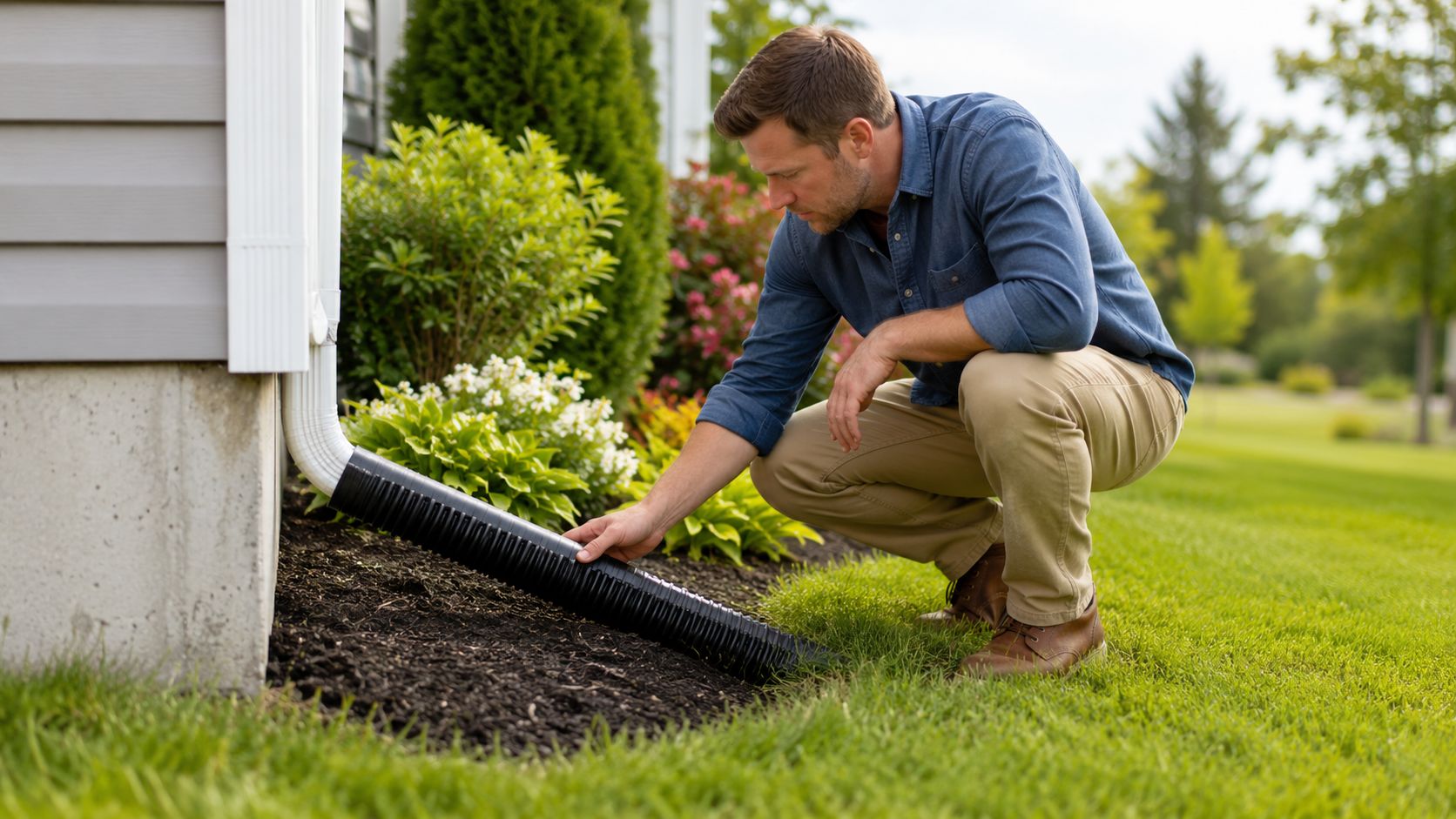
Keep roof runoff and yard drainage under control
Start with the easy checks. A surprising number of slab problems begin with water dumping in the wrong place.
Look at these first:
- Downspouts: If they empty next to a driveway, walkway, or foundation corner, they're concentrating water exactly where you don't want it.
- Gutters: Overflow during storms can create repeat saturation along slab edges.
- Sprinklers: Repeated overspray keeps concrete wet and pushes moisture into joints and cracks.
- Low spots in the yard: Standing water near the slab usually means the grade needs work.
A lot of homeowners in Hernando and Silver Springs focus on the crack they can see. The better move is to follow the water path first.
Grade the soil so water leaves
The ground around the slab should move water away, not hold it in place. To prevent pooling against concrete foundations and driveways, the grade should drop about 6 inches within the first 10 feet away from the structure, according to this grading guidance for preventing concrete water damage.
That one rule solves a lot of repeat moisture issues. If the yard pitches back toward the house, or if mulch beds and edging trap runoff beside the slab, the concrete stays saturated longer than it should.
Site check: After a heavy rain, walk the property once the storm stops. If water is standing near the slab or flowing toward the house, the drainage plan is already telling you what needs attention.
A short visual overview can help homeowners understand how runoff control works in practice:
Seal concrete before it starts taking on water
Sealing isn't just about appearance. It's part of moisture management. A good sealer reduces water absorption, helps limit staining, and adds protection against the slow deterioration that starts in open pores and small surface defects.
For homeowners who want a professional option, Riverside Sealing & Striping, LLC offers concrete sealing along with replacement and resurfacing services through its concrete and driveway service work. That kind of service makes the most sense after the slab has been evaluated for drainage issues, crack movement, and overall condition.
Protection works best when these steps happen together:
- Move water away from the slab
- Correct grading problems
- Repair the damage category correctly
- Seal the surface once it's ready
Your Local Experts for Concrete and Asphalt Solutions
Homeowners don't need a sales pitch when they're trying to decide whether a slab can be saved. They need an honest evaluation. That means identifying whether the problem is cosmetic surface wear, moderate damage that can be stabilized, or structural failure that calls for replacement.
What a professional evaluation should include
A proper site visit should look beyond the visible crack or rough patch. It should include drainage patterns, signs of recurring moisture, slab movement, edge breakdown, nearby downspouts, and whether the damage is isolated or widespread.
That matters for houses in Ocala and Summerfield, but it also matters for properties in Crystal River, Homosassa, and Inverness where moisture conditions can stay high for long stretches. The right recommendation is tied to the slab's condition, not to a one-size-fits-all sales approach.
Why dual concrete and asphalt experience matters
This is also where it helps to work with Concrete and Asphalt Experts in Marion and Citrus County. A contractor who understands both surfaces can look at the full property. A driveway may need concrete replacement in one area, while a neighboring asphalt parking area, private lane, or apron needs sealcoating or striping maintenance instead of reconstruction.
Licensed and insured local contractors with Central Florida experience usually spot the practical issues faster. They know how heat, UV, rain, traffic, and drainage patterns affect flatwork here. They also know that reliable scheduling and clear timelines matter just as much as workmanship when you're planning repairs around a home, HOA, church, retail site, or rental property.
FAQ
Can water-damaged concrete be repaired instead of replaced
Yes, sometimes. If the damage is non-structural and the slab is still sound, professional resurfacing or sealing may be a workable option. If the concrete has major movement, exposed steel, or deep failure, replacement is usually the safer choice.
What does efflorescence mean on a driveway or patio
It means water is moving through the concrete and leaving mineral deposits behind when it evaporates. The white residue itself isn't the main problem. The important question is why moisture is traveling through the slab.
How do I know if a crack is structural
Look for widening cracks, uneven slab height across the crack, repeated reopening after repair, or multiple related cracks in the same area. Those signs usually justify a professional evaluation.
Does sealing concrete really help in Florida
Yes, when the slab is in suitable condition and drainage issues are also addressed. Sealing helps limit water absorption, which is important in a region where concrete often stays damp from rain, humidity, and irrigation.
Water damage to concrete usually starts small, but it doesn't stay small when moisture keeps finding a way in. If you catch it early, you may have more options than you think. Some slabs need only maintenance. Some need resurfacing and sealing. Some need full replacement.
For homeowners and property managers in Marion County, FL, Citrus County, FL, and nearby Central Florida communities, a clear inspection is the first step. Riverside Sealing & Striping, LLC provides free estimates and no-pressure consultations for concrete and asphalt issues, including driveways, patios, sidewalks, sealcoating, and parking lot striping.